

Whole-face movement assessment in Business Bay
Full-face Botox in Dubai, balanced across facial movement
Full-face planning is not a fixed package of injection points. It begins with how different facial areas move together and which changes are appropriate for your features.
- Business BayDubai clinic
- Consultation-led carePersonal planning and clear next steps
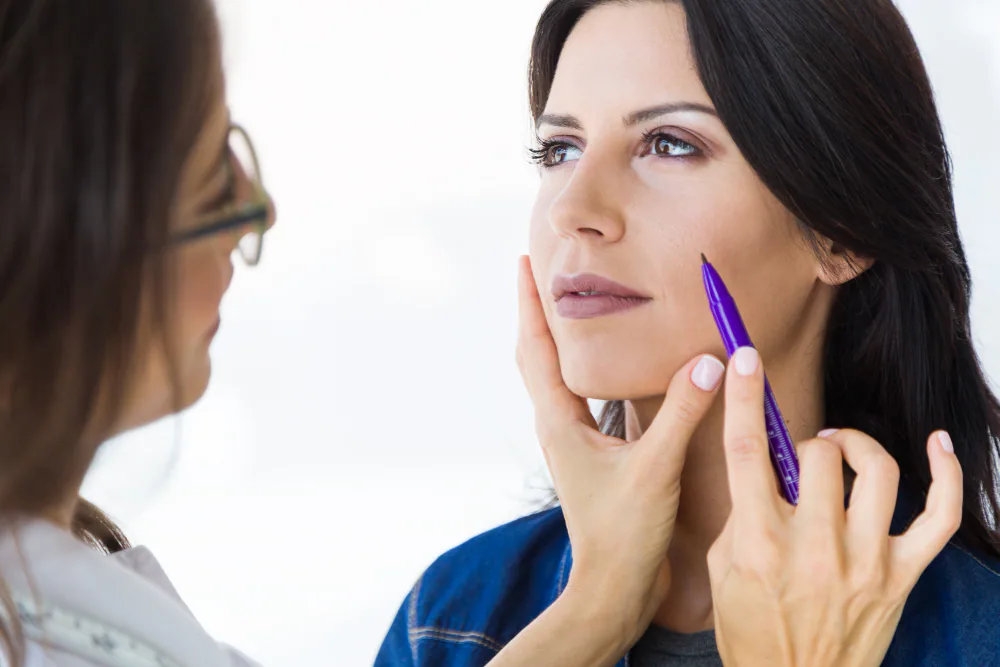
How facial areas influence one another
Treating one muscle group can change the balance of nearby movement. The plan considers expression across the face rather than isolated points.
Swipe through the planning areasUpper face
Forehead, frown-line, and eye-area movement may be considered together.
Central & lower face
Selected nose, mouth, chin, or jaw-related movement is assessed only where appropriate.
Balance & expression
Resting features, asymmetry, and the expression you want to preserve shape the plan.
At a glance
A whole-face plan is still an individual plan
A clinician may discuss selected upper-, mid-, or lower-face muscles after comparing expression, symmetry, facial support, and the changes you want. “Full face” does not mean every possible area must be treated.
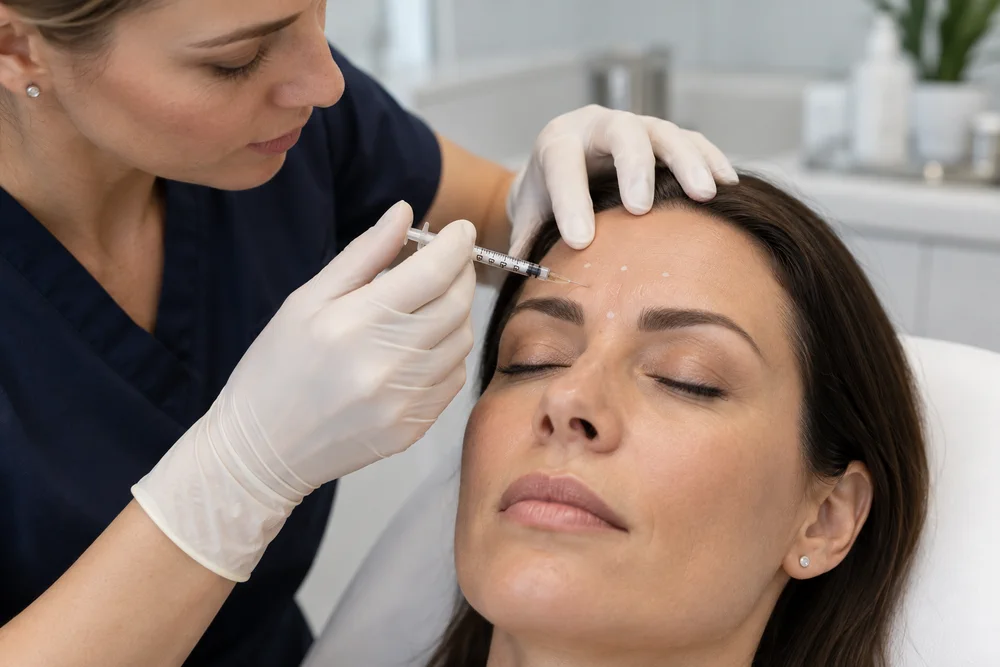
Placement follows the agreed facial movement plan rather than a standard full-face pattern.
Consultation required
The scope is chosen after a whole-face movement and medical assessment.
Usually 30–45 minutes
Visit length varies with the number of areas assessed and the treatment plan.
Changes develop over days
Initial changes may appear within days and continue developing during the first one to two weeks.
Temporary; duration varies
Duration varies by area, product, treatment plan, and individual response.
Expression remains part of the plan
The goal and degree of muscle relaxation are discussed before treatment.
Botulinum-toxin products have different units and are not interchangeable. Mahan uses Nabota, BOTOX by Allergan, and Dysport; your clinician selects the product and plan after assessment.

Choosing the right scope
When a whole-face assessment may help
This approach can help when several movement-led concerns interact. Fixed lines, volume loss, skin quality, or laxity may require a different or combined discussion.
Often discussed for
- Several movement-led facial concerns
- A coordinated rather than area-by-area discussion
- Balancing softening with preserved expression
- Understanding which concerns are not muscle-led
May need another approach
- Replacing facial volume or structural support
- Directly improving dehydration or skin texture
- Treating every line with the same method
- A guaranteed symmetrical or identical result
Patient results
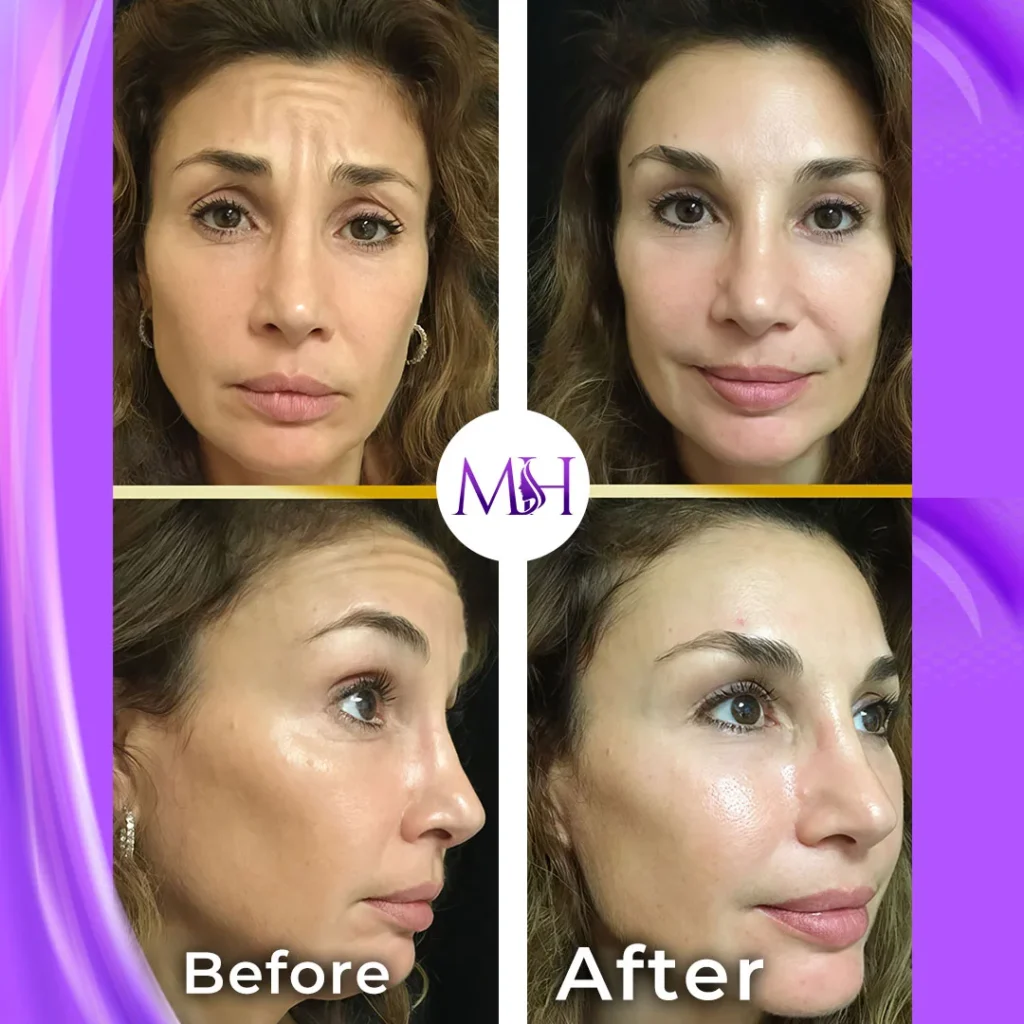
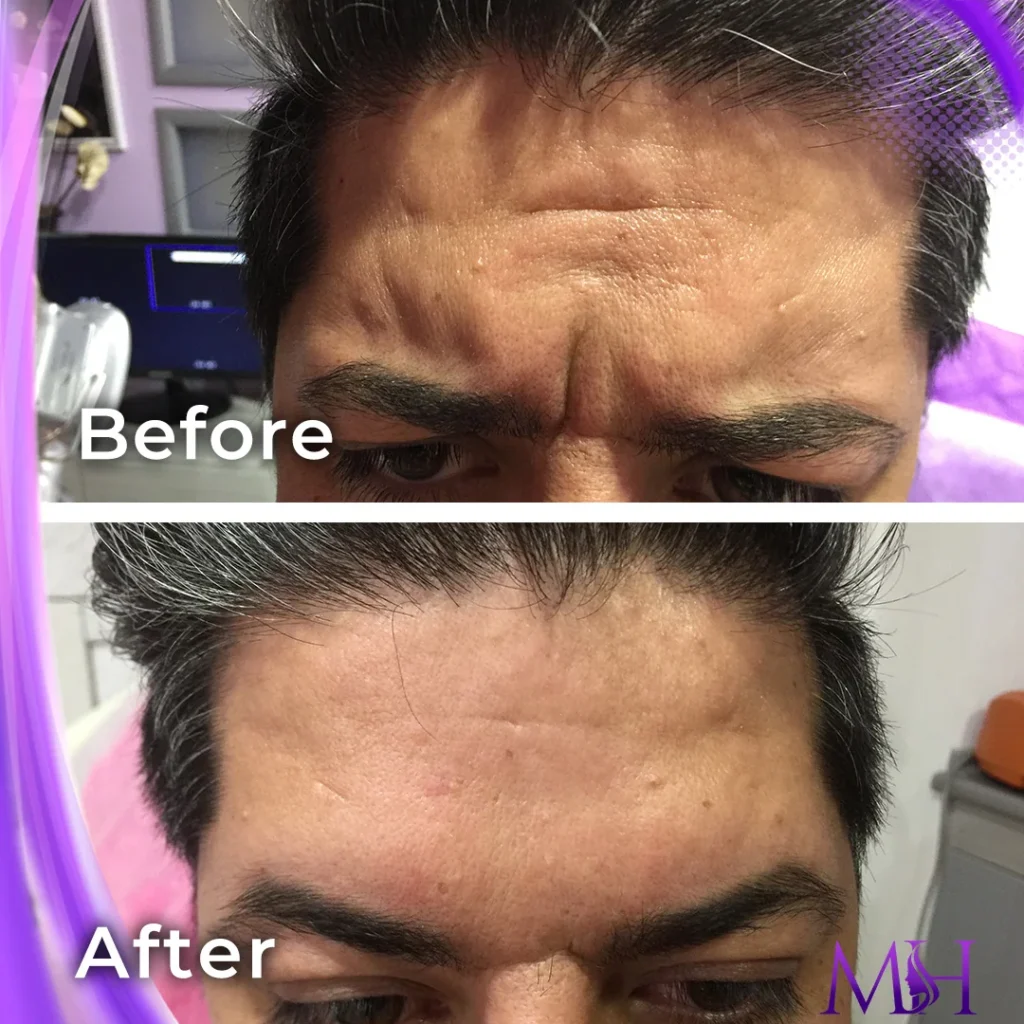
Selected full-face Botox results
Clinic-supplied comparisons show individual facial movement outcomes and help support a realistic consultation.
A broader conversation
Begin with the result you want—not a list of areas
Tell us what looks unbalanced, tense, or different in movement. Your clinician can explain which areas, if any, belong in one plan.
Your consultation journey
Before, during and after your visit
The consultation, treatment plan, and aftercare are adjusted to the area being assessed and your medical context.
- 01
Map movement across the face
The clinician reviews the concerns you see, facial expression at rest and in movement, previous treatment, and relevant medical context.
- 02
Agree selected areas
The clinician explains which muscles may be suitable, expected limits, product choice, and why some areas may not need treatment.
- 03
Review aftercare and follow-up
If you proceed, treatment follows the agreed plan and you receive written aftercare and guidance on when review may be useful.
Suitability & safety
Important details to share with your clinician
Botulinum toxin is a prescription treatment and is not suitable for everyone. Your clinician reviews relevant health information, medicines, previous treatment, and area-specific risks.
- Discuss pregnancy or breastfeeding, infection near a proposed area, allergies, neuromuscular conditions, medicines, and previous botulinum-toxin treatment.
- Area-specific effects can include temporary redness, swelling, bruising, headache, asymmetry, or unwanted weakness such as eyelid or brow droop.
- Treating several facial areas requires conservative planning because relaxing one muscle group can change the balance of nearby movement.
Urgent: Seek urgent medical attention for difficulty swallowing, speaking, or breathing after treatment.
This page provides general information and does not replace an individual medical consultation.
Suitability, product choice, treatment areas, and limitations are discussed before you decide.
02Individual treatment planThe suitable treatment, product, and placement are selected only after an individual clinical assessment.
03Written aftercareYou receive individual aftercare guidance and clear advice about when to contact the clinic.
Care at Mahan
A clinic team that starts with context
Owner-verified clinic team. Your visit starts with suitability, expectations, and a treatment plan built around the area being assessed.
Meet the Mahan clinic
Co-Founder

Co-Founder and General Manager
Questions, answered
Full-face Botox FAQs
Useful general information first; a clinician can then make it specific to you.
Does full-face Botox mean treating every area?
No. “Full face” describes the scope of the assessment, not an obligation to inject every possible area. The clinician selects only suitable muscles after reviewing movement and your goals.
How is full-face Botox different from upper-face Botox?
Upper-face treatment focuses on forehead, frown-line, and eye-area movement. A full-face assessment may also consider selected central or lower-face muscles where clinically appropriate.
Can it replace filler or Skin Booster treatment?
No. Botulinum toxin changes selected muscle activity. Fillers address selected volume or support concerns, while Skin Boosters focus on skin quality and hydration.
Will my face look frozen?
The plan, areas, product, and individual response determine the degree of change. A careful assessment can support a measured approach, but no particular result can be guaranteed.
How long can the result last?
The effect is temporary. Duration varies by area, product, treatment plan, and individual response; review timing is agreed with your clinician.
How do I arrange a consultation?
Use the form, call, or message us on WhatsApp. A coordinator replies during clinic hours, 11 AM–8 PM, closed Thursday.
Clinical information sources
Evidence behind this page
General information was checked against current official product and healthcare guidance. Sources accessed August 2026.
Speak with the clinic
Start with a full-face movement assessment
Tell us what you would like to discuss. Submitting an enquiry does not confirm treatment or an appointment.
Message us on WhatsApp