
Upper-face movement assessment in Business Bay
Upper-face Botox in Dubai, planned around expression
Forehead, frown-line, and eye-area movement are assessed together so the plan can soften selected lines while considering brow position and natural expression.
- Business BayDubai clinic
- Consultation-led carePersonal planning and clear next steps
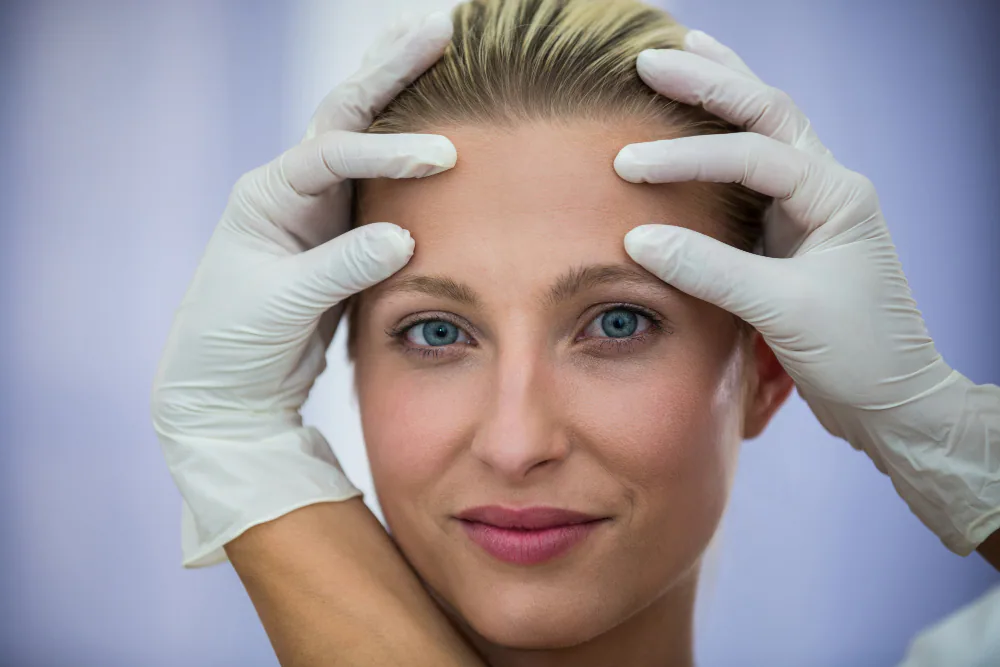
Three areas, one movement balance
The position and strength of each muscle group can affect the others, particularly around the brows.
Swipe through the areasForehead
Horizontal lines appear as the brows lift and the frontalis muscle contracts.
Between the brows
Glabellar or frown lines become more visible with concentration or frowning.
Crow’s feet
Lines at the outer eye become more visible when smiling or squinting.
At a glance
Upper-face treatment begins with eyebrow and eye movement
The forehead, muscles between the brows, and muscles around the eyes work as a connected system. The clinician compares movement, resting lines, brow position, and symmetry before discussing placement.
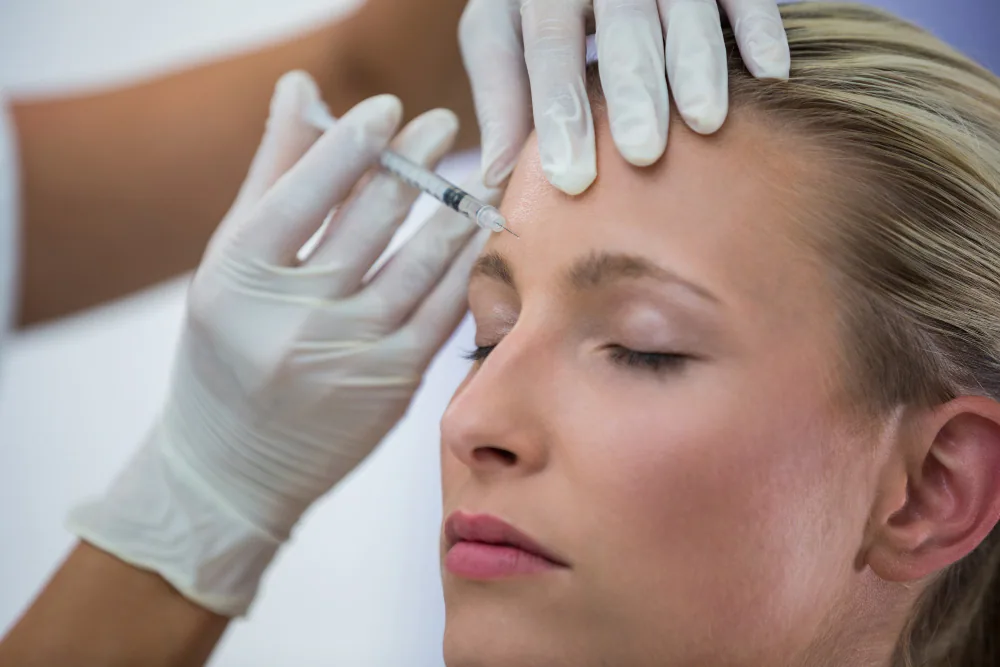
The treatment plan follows the movement assessment and agreed degree of change.
Movement assessment first
Brow position, symmetry, and expression are reviewed before treatment.
Usually 30–45 minutes
Timing includes consultation, assessment, and the agreed treatment plan.
Initial change within days
The response usually develops progressively rather than immediately.
Temporary; duration varies
Duration varies by muscle activity, area, product, and individual response.
Little downtime for many patients
Temporary redness, swelling, tenderness, or bruising can still occur.
Botulinum-toxin products have different units and are not interchangeable. Mahan uses Nabota, BOTOX by Allergan, and Dysport; your clinician selects the product and plan after assessment.
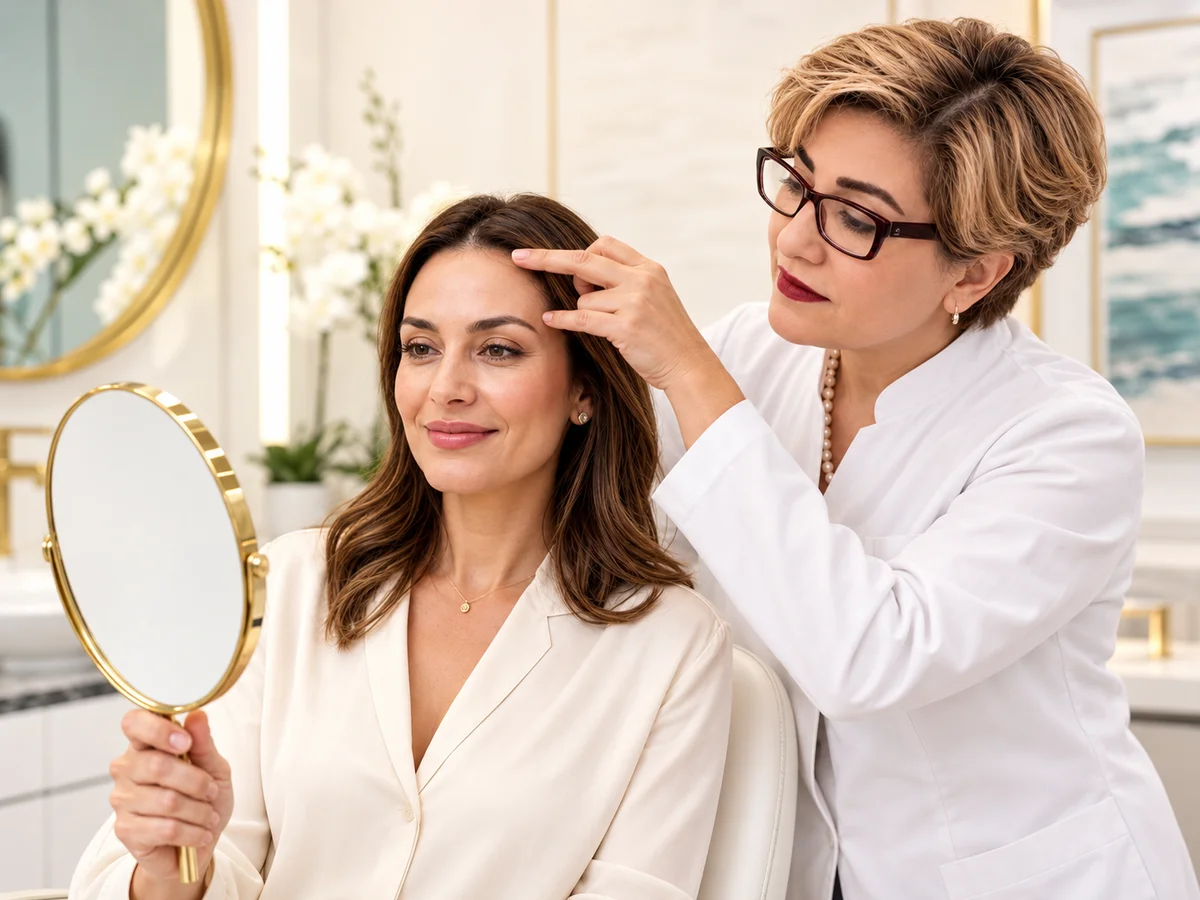
Choosing the right approach
Which upper-face concerns are movement-led?
Botulinum toxin is mainly discussed for lines created or deepened by muscle movement. Lines that remain at rest or concerns involving volume and skin quality may need a different conversation.
Often discussed for
- Forehead lines visible with brow movement
- Frown lines between the brows
- Crow’s feet visible when smiling
- A measured discussion about upper-face balance
May need another approach
- Under-eye hollowing or lost facial volume
- Skin dehydration or texture concerns
- Every line visible when the face is fully at rest
- A guaranteed brow position or identical result
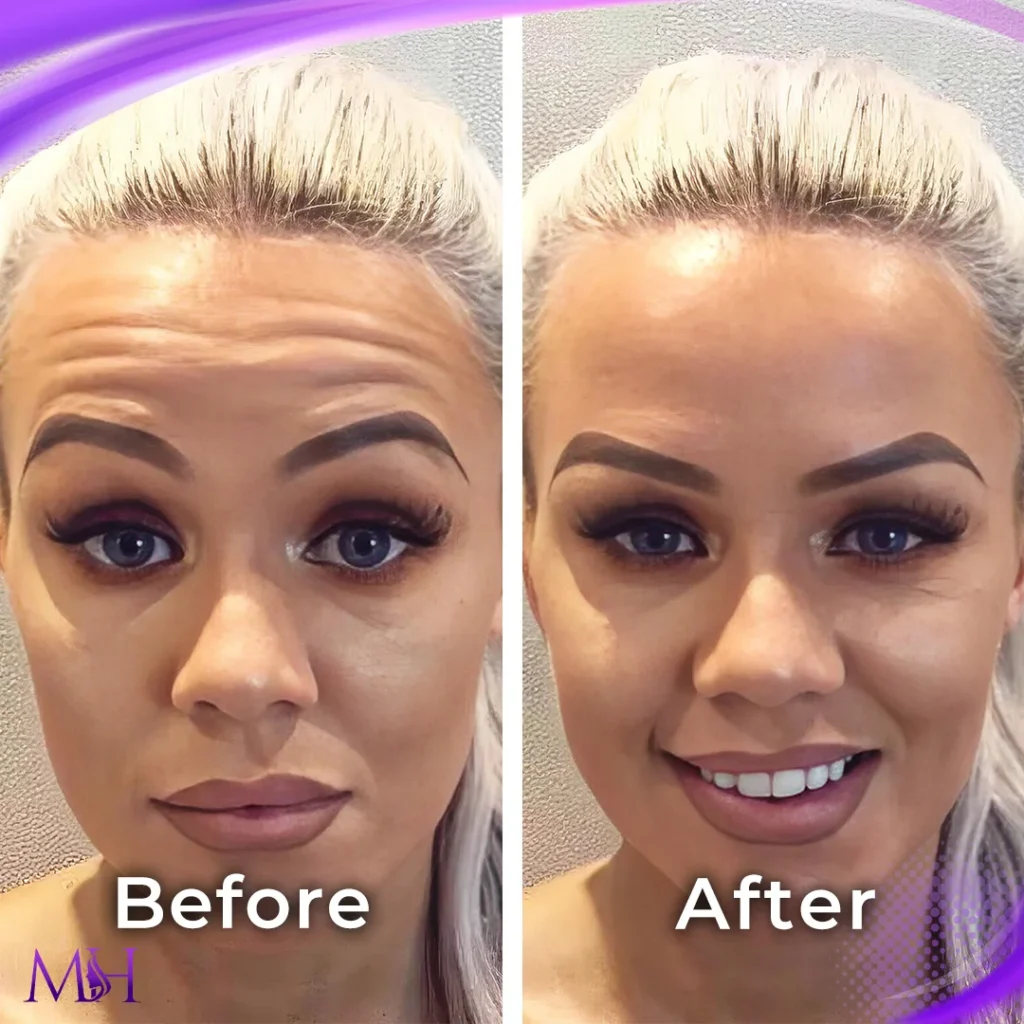
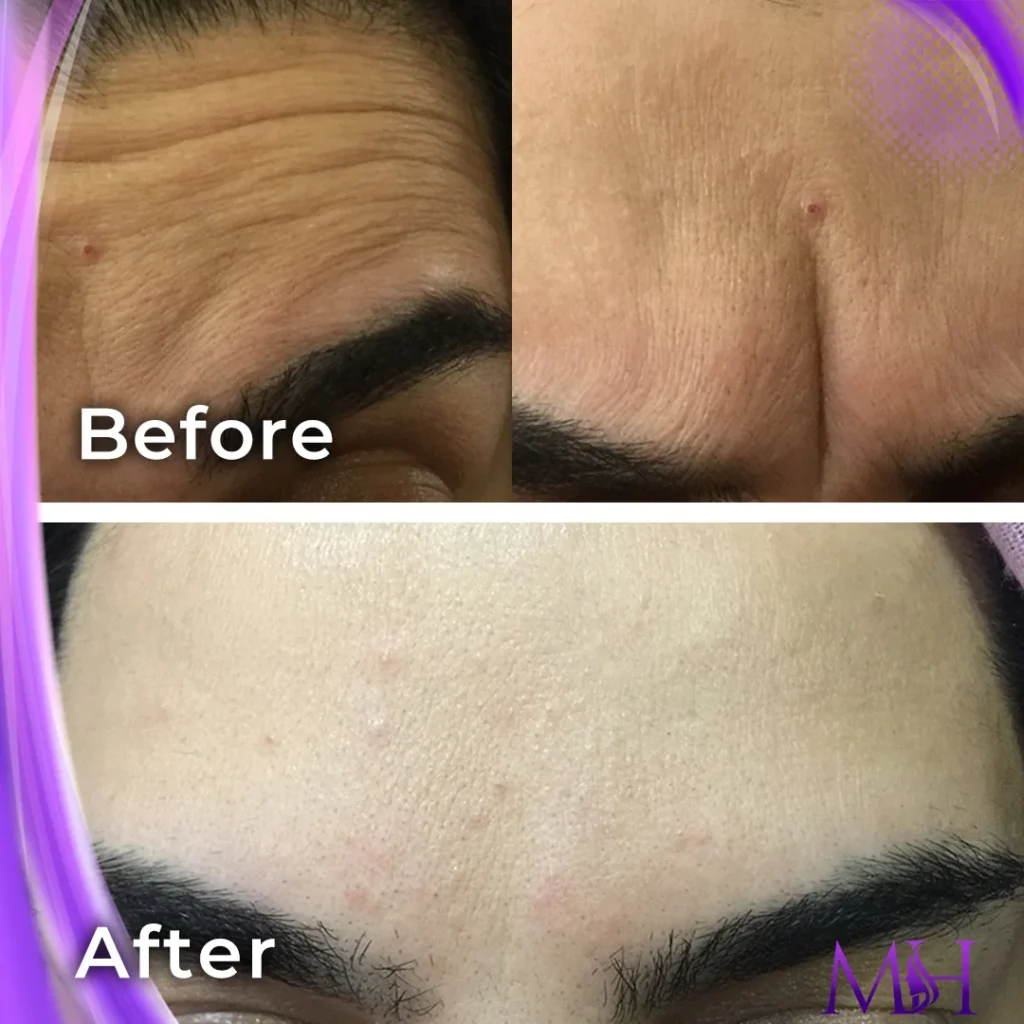
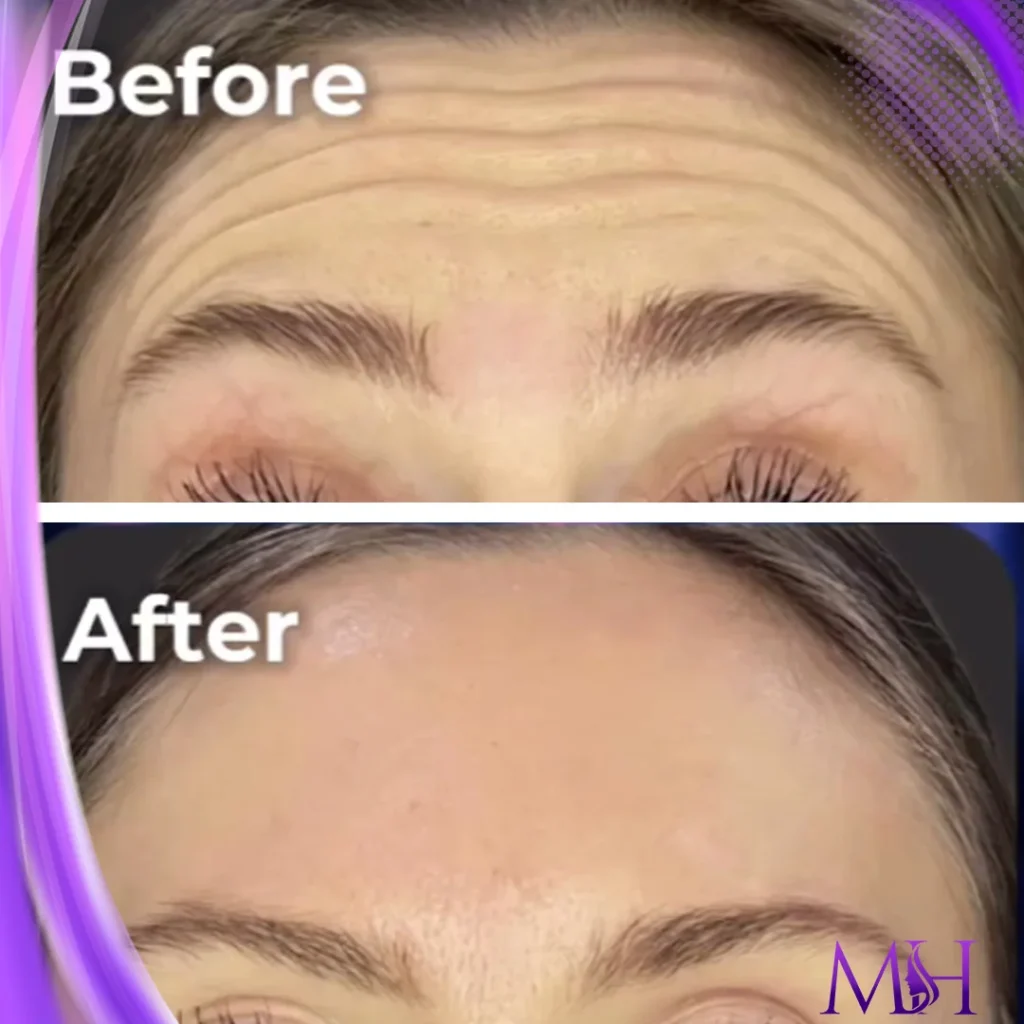
Patient results
Upper-face Botox before and after
Selected clinic-supplied cases show individual forehead and expression-line outcomes.
Expression matters
Show us the movement that concerns you
A short movement assessment can clarify whether the concern sits in the forehead, glabella, eye area, or a combination.
Your consultation journey
Before, during and after your visit
The consultation, treatment plan, and aftercare are adjusted to the area being assessed and your medical context.
- 01
Make the relevant expressions
The clinician observes the forehead while you raise your brows, frown, smile, and relax your face.
- 02
Agree areas and degree of change
Placement is planned around muscle strength, brow position, symmetry, previous response, and the expression you want to preserve.
- 03
Follow personal aftercare
If you proceed, you receive written aftercare and guidance about expected timing and review.
Suitability & safety
Important details to share with your clinician
Botulinum toxin is a prescription treatment and is not suitable for everyone. Your clinician reviews relevant health information, medicines, previous treatment, and area-specific risks.
- Discuss pregnancy or breastfeeding, infection near the area, allergies, neuromuscular conditions, medicines, and previous botulinum-toxin treatment.
- Possible effects include temporary redness, swelling, bruising, tenderness, headache, asymmetry, eyelid droop, or brow droop.
- Follow the clinician’s written aftercare rather than generic instructions because the advice may vary with your treatment plan.
Urgent: Seek urgent medical attention for difficulty swallowing, speaking, or breathing after treatment.
This page provides general information and does not replace an individual medical consultation.
Suitability, product choice, treatment areas, and limitations are discussed before you decide.
02Individual treatment planThe suitable treatment, product, and placement are selected only after an individual clinical assessment.
03Written aftercareYou receive individual aftercare guidance and clear advice about when to contact the clinic.
Care at Mahan
A clinic team that starts with context
Owner-verified clinic team. Your visit starts with suitability, expectations, and a treatment plan built around the area being assessed.
Meet the Mahan clinic
Co-Founder

Co-Founder and General Manager
Questions, answered
Upper-face Botox FAQs
Useful general information first; a clinician can then make it specific to you.
Which areas count as the upper face?
The upper face commonly includes the forehead, the area between the brows, and the outer eye area. The clinician decides which areas are suitable after assessing movement.
Can treating the forehead affect my brows?
Forehead and brow muscles interact. This is why brow position and muscle strength are assessed before placement and why treatment is not planned from a standard pattern.
Do all three areas need to be treated?
No. The assessment covers the upper-face system, but only suitable areas that support the agreed goal are included.
When might I notice a change?
Initial change may begin within a few days and usually develops during the first one to two weeks. Timing varies.
How long can it last?
The effect is temporary. Duration varies between muscles, products, treatment plans, and individuals; ask about the expected response and review timing for your plan.
How do I arrange a consultation?
Use the form, call, or message us on WhatsApp. A coordinator replies during clinic hours, 11 AM–8 PM, closed Thursday.
Clinical information sources
Evidence behind this page
General information was checked against current official product and healthcare guidance. Sources accessed August 2026.
Speak with the clinic
Start with an upper-face Botox consultation
Tell us what you would like to discuss. Submitting an enquiry does not confirm treatment or an appointment.
Message us on WhatsApp