

Under-eye filler consultation in Business Bay
Under-eye fillers in Dubai, with suitability first
The under-eye area needs a careful assessment. A clinician first distinguishes hollowness and shadowing from concerns that may need a different approach.
- Business BayDubai clinic
- Consultation-led carePersonal planning and clear next steps

What the clinician is looking at
The under-eye area is assessed in context with the cheek, skin, colour changes, and the pattern of shadowing rather than as an isolated line.
Swipe through the considerationsHollowness & shadowing
A volume-related hollow can create a shadow. This is different from every cause of dark circles.
Lower lid & cheek transition
The relationship between the lower eyelid and cheek influences whether a filler discussion is appropriate.
Skin quality & colour
Pigmentation, skin texture, and puffiness may need a different treatment route or a clinical opinion first.
At a glance
Under-eye concerns are not all the same
Under-eye filler may be discussed for selected volume-related hollows or shadows. It is not automatically the right answer for pigmentation, puffiness, skin laxity, or every tired-looking eye concern.
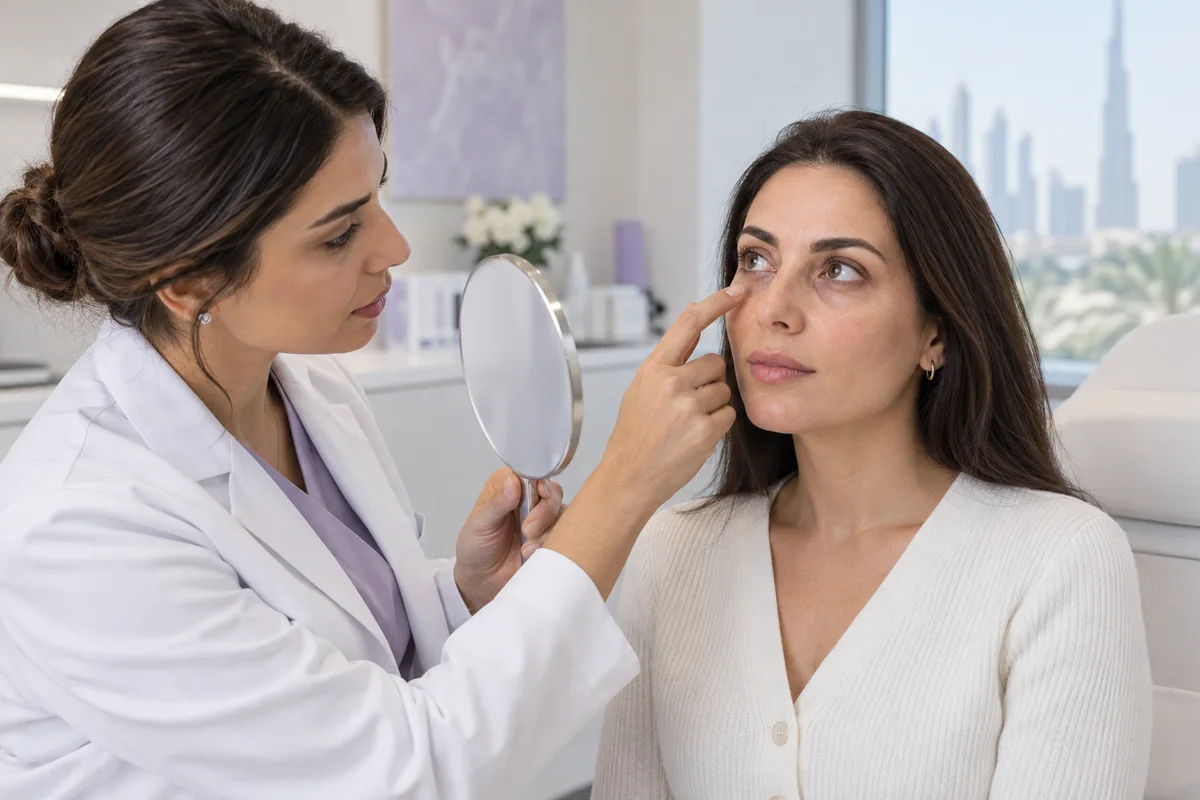
Technique and suitability need individual clinical assessment.
Consultation required
The clinician assesses the source of the concern before discussing whether filler is appropriate.
Around 40 minutes
Timing includes consultation and treatment planning. It varies by individual plan.
Individual product selection
The clinician selects the product and placement after assessing the area, medical history, and treatment goal.
Suitability is selective
Filler may not be appropriate for every type of darkness, puffiness, skin laxity, or medical concern.
Individual aftercare
Temporary swelling, redness, tenderness, or bruising can occur and must be discussed before treatment.
A clinician decides whether treatment is suitable after assessment.
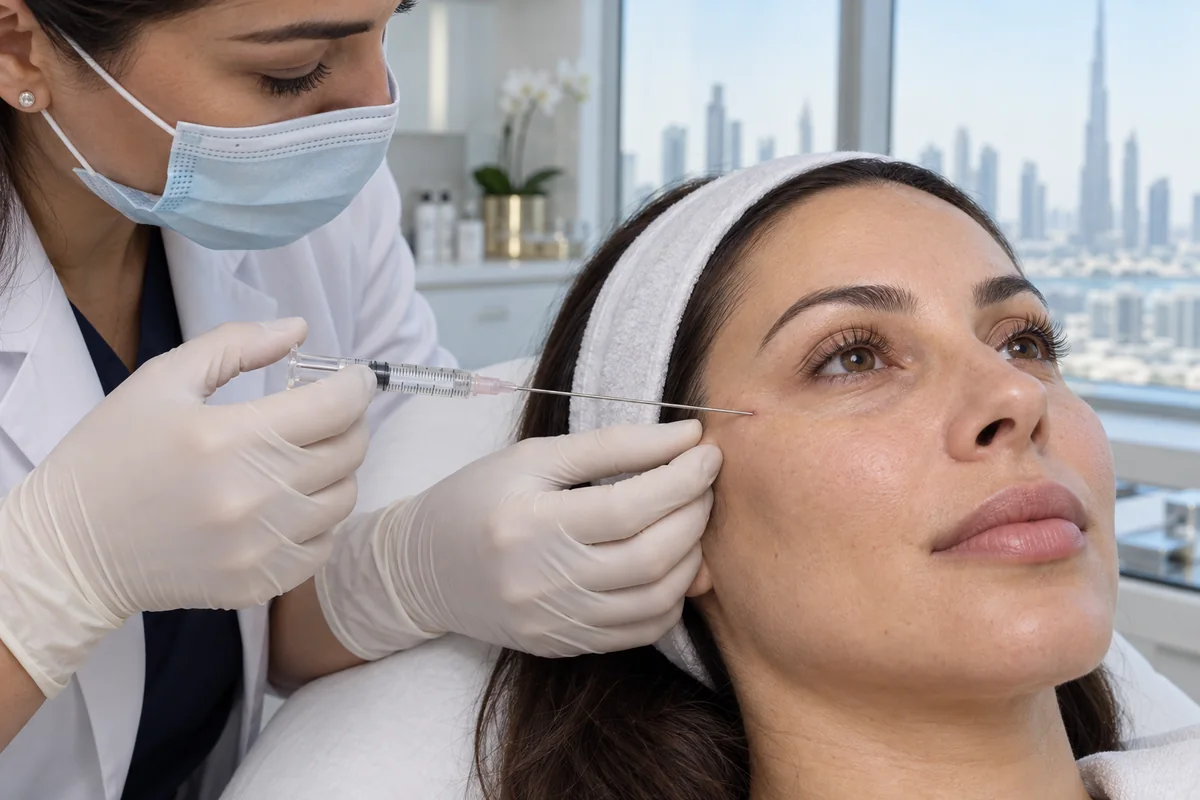
Choosing the right approach
When under-eye filler may fit—and when it may not
The lower eyelid and cheek transition is delicate. A careful consultation helps identify whether a volume-related shadow is part of the concern and whether filler is appropriate.
Often discussed for
- Selected under-eye hollows or shadows where a clinician identifies a volume-related component.
- People seeking a conservative, suitability-led consultation.
- Patients who understand that timing, result, and recovery vary.
May need another approach
- Pigmentation-related darkness, where filler may not address the main cause.
- Prominent puffiness, skin laxity, or other concerns requiring another treatment route or medical opinion.
- Anyone with an active infection, inflammation, injury, or an unsuitable health context.
Patient results
Individual under-eye treatment results
Clinic-supplied examples from selected under-eye filler cases. They do not show one expected outcome for every concern.
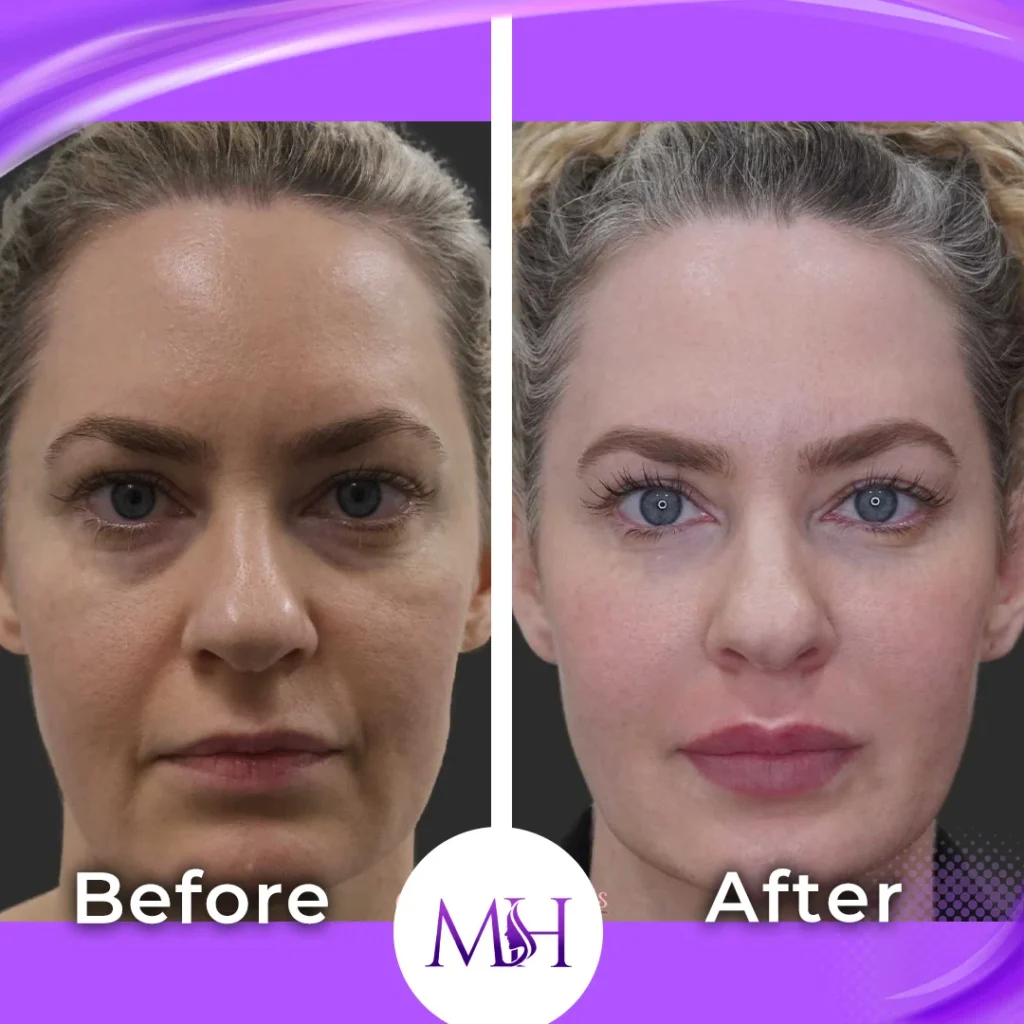
Comparison limitation: lighting, colour and lip appearance differ between these photographs. These differences can affect perceived under-eye shadows; this is not a controlled comparison.
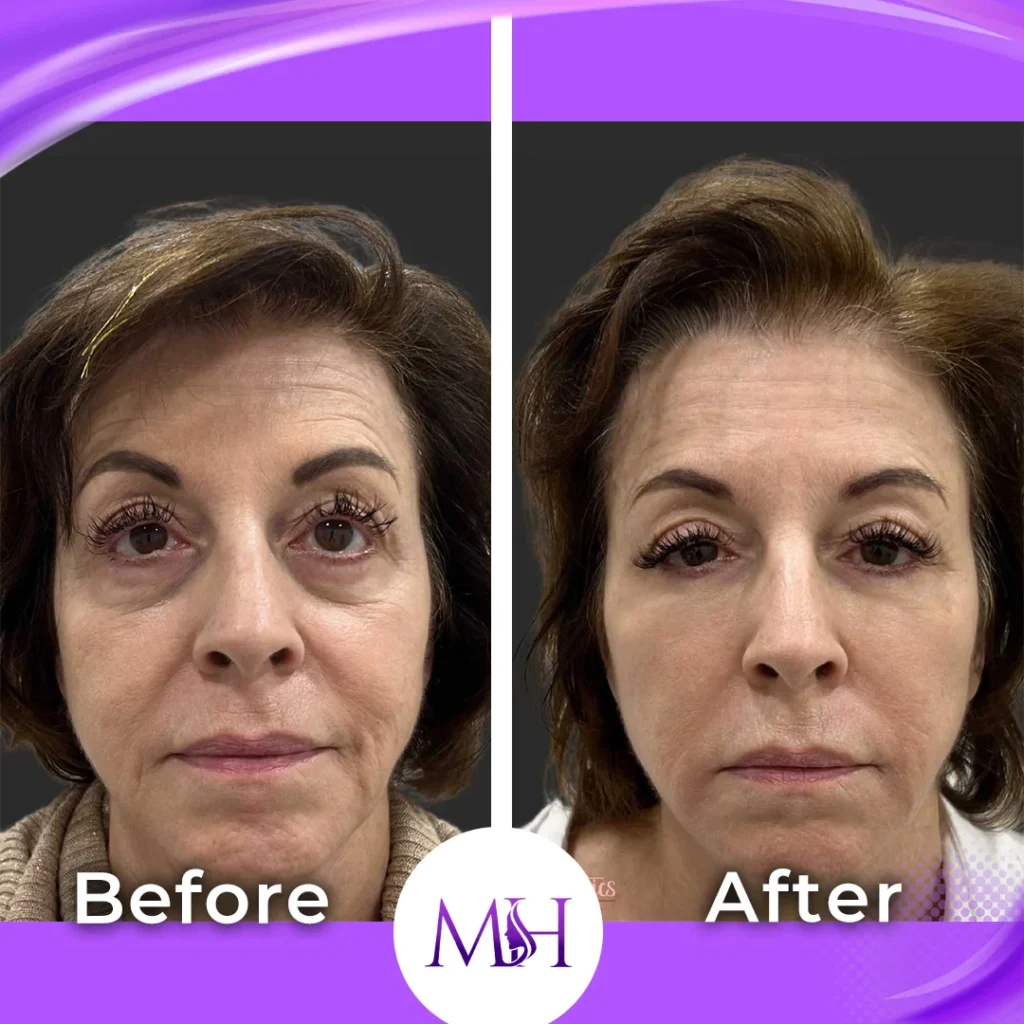
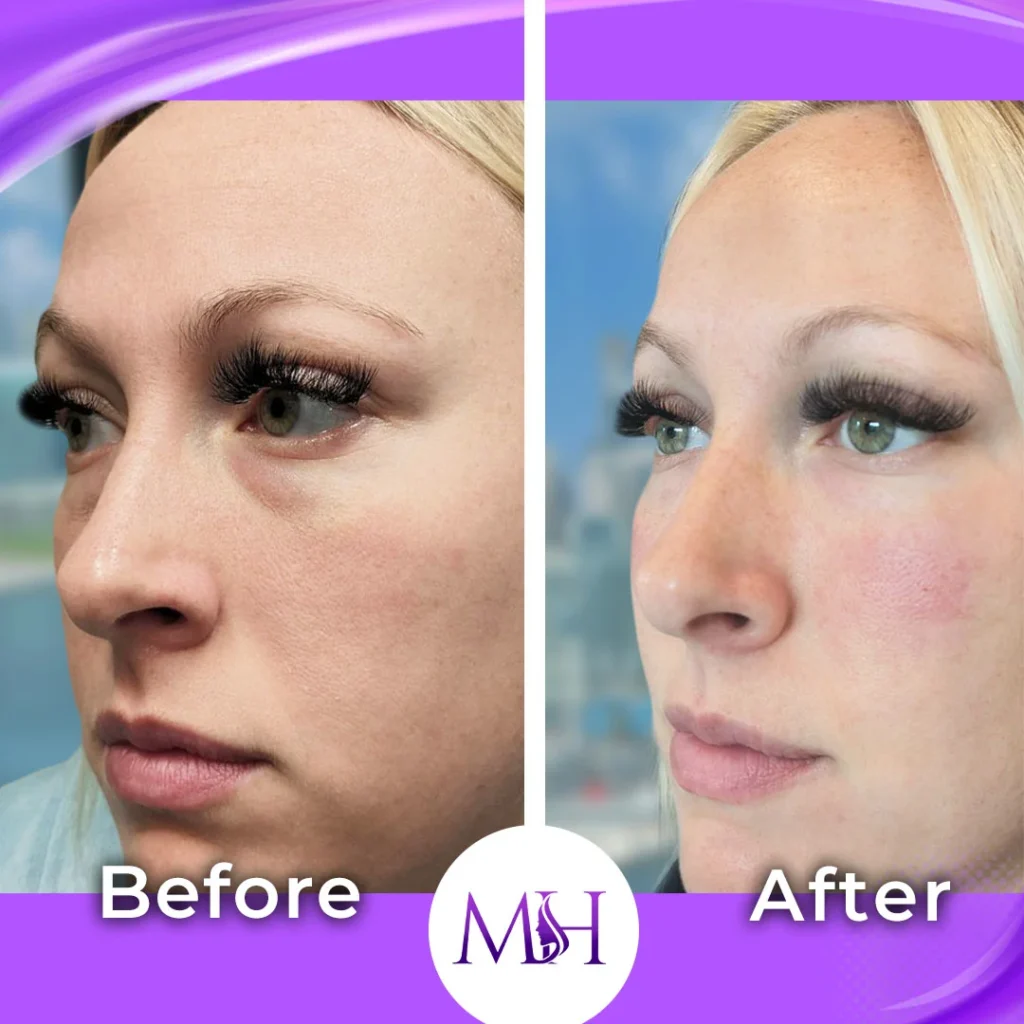
Comparison limitation: lighting and camera framing differ between these photographs. These differences can affect perceived under-eye shadows; this is not a controlled comparison.
Need a tailored answer?
Begin with a personal consultation
Share the concern you would like to discuss and the kind of change you are considering.
Your consultation journey
Before, during and after your visit
Each stage gives you space to ask questions and decide whether treatment feels right for you.
Suitability first 01Assess the cause of the concern
We discuss what you notice and review the lower eyelid, cheek, shadowing, skin quality, and relevant health context.
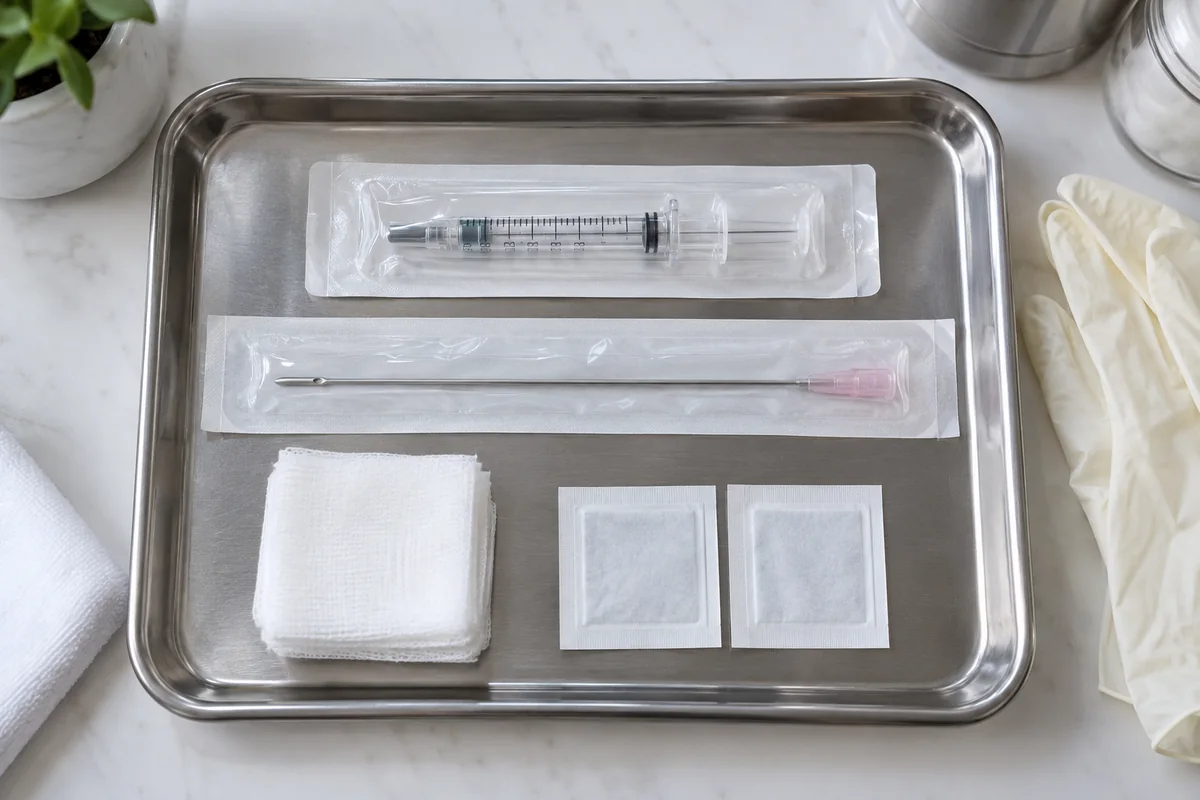
Clinical preparation 02Discuss whether filler is suitable
If appropriate, the clinician explains the proposed approach, limitations, possible side effects, and aftercare.
- 03
Leave with clear guidance
You receive tailored aftercare information and a clear plan for follow-up or another recommended route.
Suitability & safety
Important details to share with your clinician
A full consultation is necessary before treatment, including a discussion of relevant health information and possible side effects.
- Discuss pregnancy or breastfeeding, allergies, previous filler treatment, medicines, and any relevant eye, skin, or health history.
- Delay treatment if there is an active infection, inflammation, injury, or a current skin condition near the area until a clinician advises otherwise.
- The clinician discusses whether filler is appropriate for the specific cause of your under-eye concern and whether an alternative is safer or more relevant.
- Filler can cause swelling, bruising, infection, lumps, or other complications. Rare unintended injection into a blood vessel can cause tissue injury, vision loss, or stroke; a qualified clinician does not eliminate every risk.
Urgent: Seek immediate medical attention for unusual or increasing pain, white, grey, blue or mottled skin, any vision change, sudden weakness or difficulty speaking, or difficulty breathing or swallowing. Do not wait for a routine clinic reply.
This page provides general information and does not replace an individual medical consultation.

Care at Mahan
A clinic team that starts with context
Owner-verified clinic team. Your visit starts with a conversation about suitability, expectations, and a plan that feels right for you.
Meet the Mahan clinic
Co-Founder

Co-Founder and General Manager
Questions, answered
under-eye filler FAQs
Useful general information first; a clinician can then make it specific to you.
What are under-eye fillers?
Under-eye fillers are injectable products that may be discussed for selected hollows or shadows at the lower lid and cheek transition. A clinician must first assess whether this is the source of the concern.
Can filler treat all dark circles?
No. Darkness can relate to volume loss, shadowing, pigmentation, skin quality, puffiness, or other factors. Filler is considered only when it is appropriate for the individual cause.
How is the filler product selected?
The clinician selects a product only after assessment.
How long does an under-eye filler appointment take?
Injectable appointments are generally planned for around 40 minutes, including the discussion needed before treatment. Timing varies by plan.
Is there downtime?
Many people return to usual routines with little downtime, but temporary swelling, redness, tenderness, or bruising can occur. Individual aftercare is important for this delicate area.
How do I arrange a consultation?
Use the consultation form, call the clinic, or message us on WhatsApp. A coordinator replies during clinic hours, 11 AM–8 PM, closed Thursday.
Clinical information sources
Evidence behind this page
General treatment information was checked against current clinical guidance.
Speak with the clinic
Start with an under-eye filler consultation
Tell us the area or concern you would like to discuss. Submitting an enquiry does not confirm treatment or an appointment.
Message us on WhatsApp