

Palm hyperhidrosis assessment in Business Bay
Botox for sweaty hands in Dubai, with palm-specific assessment
Palmar hyperhidrosis can affect handshakes, phones, paperwork, grip, and confidence. The consultation reviews how much you sweat, possible causes, previous treatment, hand function, and comfort planning.
- Business BayDubai clinic
- Consultation-led carePersonal planning and clear next steps

What the consultation needs to understand
Location alone is not enough. Pattern, cause, severity, skin health, and daily impact shape the next step.
Swipe through the assessmentPattern & severity
The palms and fingers are reviewed to understand where sweating interferes most.
Cause & history
Onset, triggers, night sweating, medicines, health conditions, and family history are discussed.
Hand function
Grip demands, occupation, sport, discomfort control, and temporary weakness risk shape the plan.
At a glance
Excessive sweating deserves a cause-first assessment
Focal hyperhidrosis means sweating beyond what is needed for temperature control in a particular area. The clinician reviews pattern, duration, triggers, impact, medicines, and signs of another cause before treatment.
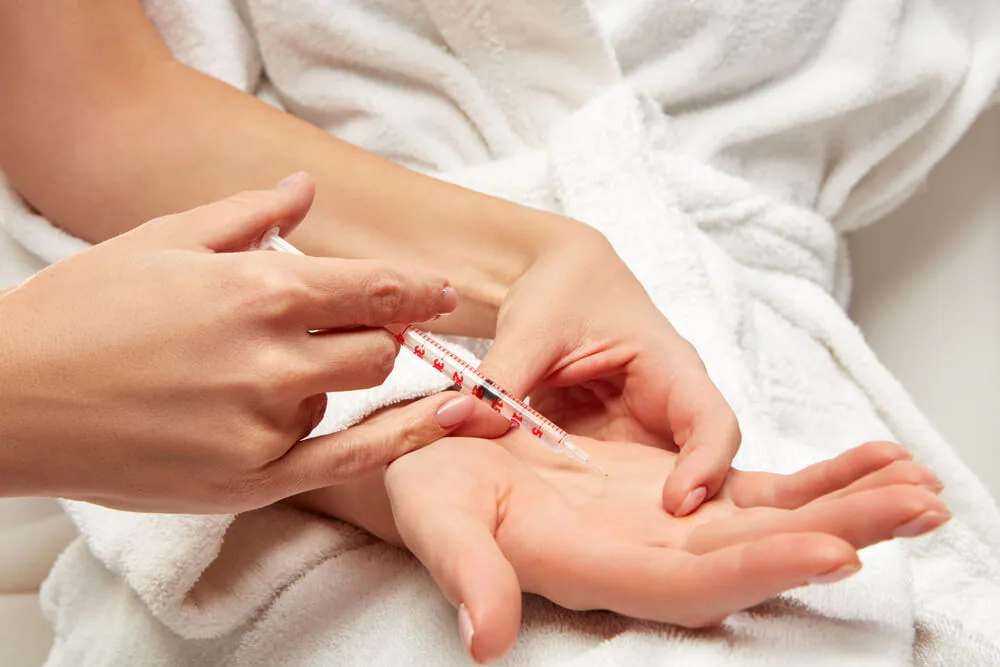
Small treatment points are distributed through the agreed sweat-producing area.
Cause-first assessment
The clinician reviews localised versus generalised sweating, medical context, medicines, and skin health.
Usually 30–45 minutes
Timing includes assessment, area mapping, comfort planning, and treatment where suitable.
Change can begin within days
Sweating reduction may develop progressively during the first one to two weeks.
Often several months
Duration varies by area, product, treatment plan, and individual response.
Area-specific aftercare
Temporary tenderness, bruising, and functional effects depend on the location treated.
Use in the palms may be outside a product’s licensed indication depending on the product and jurisdiction. The clinician explains this during consent.

Primary or secondary sweating?
When focal hyperhidrosis treatment may fit
A local treatment plan is considered only after checking that the pattern is suitable and that another condition, medicine, infection, or skin problem is not the more important issue.
May be discussed for
- Sweating that affects both palms or selected hand areas
- Difficulty with grip, touchscreens, paper, or social contact
- Symptoms persisting despite appropriate first-line options
- A discussion of palm-specific comfort and function
Needs another or additional assessment
- New generalised or night sweating without medical review
- Sweating caused by a medicine or another condition that needs treatment
- A guaranteed completely dry result
- Proceeding without discussing temporary hand weakness and discomfort
Practical impact matters
Tell us what sweating changes in your day
Clothing, grip, footwear, work, exercise, skin problems, and social impact help the clinician understand severity.
Your consultation journey
Assessment, mapping, and aftercare
The treatment area is mapped carefully and comfort planning differs between underarms, palms, and soles.
- 01
Review pattern and possible causes
The clinician asks when sweating began, where else it occurs, night symptoms, triggers, medicines, health conditions, skin problems, and what you have already tried.
- 02
Map the treatment area
If suitable, the area and comfort approach are planned and the clinician explains expected benefit, limitations, product use, and area-specific risks.
- 03
Follow area-specific aftercare
You receive written guidance about tenderness, activity, skin care, expected timing, and when to contact the clinic.
Suitability & safety
Important details to share with your clinician
Botulinum toxin is a prescription treatment and is not suitable for everyone. Your clinician reviews relevant health information, medicines, previous treatment, and area-specific risks.
- Discuss generalised or night sweating, unexplained weight or health changes, relevant medical conditions, medicines, pregnancy or breastfeeding, infection, allergies, neuromuscular conditions, and previous treatment.
- Possible effects include injection-site pain, redness, swelling, bruising, incomplete or uneven sweat reduction, compensatory concerns, and temporary hand or grip weakness.
- New or generalised sweating can be secondary to another condition or medicine and may require medical investigation before local treatment.
Urgent: Seek urgent medical attention for difficulty swallowing, speaking, or breathing, or severe or spreading weakness after treatment.
This page provides general information and does not replace an individual medical consultation.
Suitability, product choice, treatment areas, and limitations are discussed before you decide.
02Individual treatment planThe suitable treatment, product, and placement are selected only after an individual clinical assessment.
03Written aftercareYou receive individual aftercare guidance and clear advice about when to contact the clinic.
Care at Mahan
A clinic team that starts with context
Owner-verified clinic team. Your visit starts with suitability, expectations, and a treatment plan built around the area being assessed.
Meet the Mahan clinic
Co-Founder

Co-Founder and General Manager
Questions, answered
Hand hyperhidrosis Botox FAQs
Useful general information first; a clinician can then make it specific to you.
How is hyperhidrosis different from normal sweating?
Hyperhidrosis causes sweating beyond what the body needs for temperature control and can interfere with daily life. A clinician assesses whether the pattern is focal and whether another cause needs investigation.
How does botulinum toxin reduce sweating?
It temporarily reduces the nerve signals that activate sweat glands in the treated area. The effect is local and temporary, and the degree of response varies.
When might I notice a change?
Sweating reduction may begin within several days and continue developing during the first one to two weeks. Individual timing varies.
How long can the effect last?
Many patients experience benefit for several months. The treated area, product, plan, and individual response affect duration.
Can treatment affect my grip?
Temporary weakness of small hand muscles or changes in grip can occur. Occupation, sport, and daily hand use should be discussed before treatment.
When should sweating be medically investigated?
New generalised sweating, significant night sweating, or sweating with other health changes should be assessed for an underlying condition or medicine effect before local treatment.
Clinical information sources
Evidence behind this page
General information was checked against current official product and healthcare guidance. Sources accessed August 2026.
Speak with the clinic
Request an excessive-sweating consultation
Tell us which area is affected, how long it has been happening, what you have tried, and whether sweating occurs at night or elsewhere.
Message us on WhatsApp