

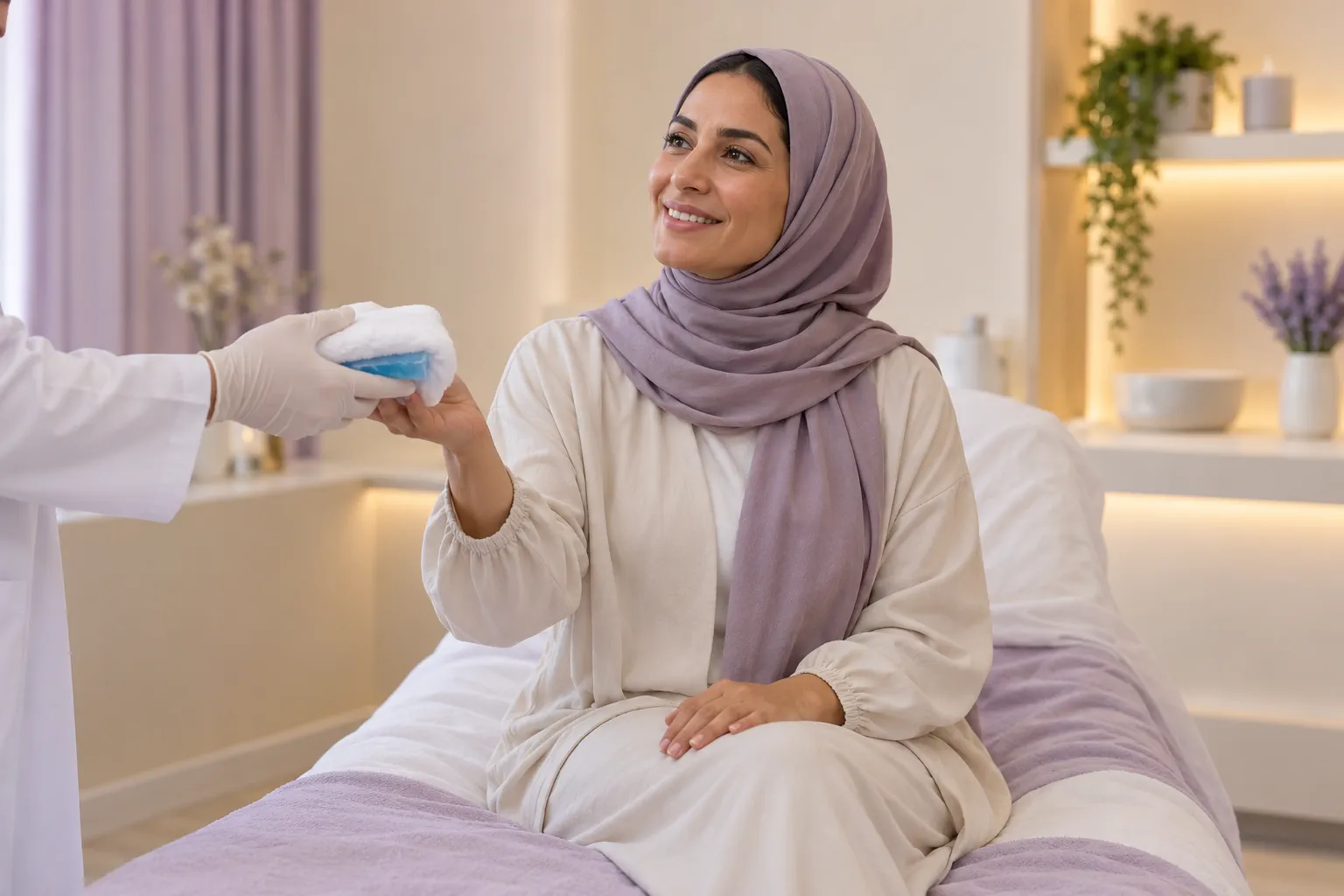
Aftercare depends on the procedure, treatment area, products and your health. Instructions for an injectable, peel or device treatment are not interchangeable. Use this page to prepare questions, and follow the written advice from your treating clinician rather than a universal online timetable.
1. Understand Your Individual Instructions
Before leaving, ask what is expected, what to avoid and when to seek help. If an instruction is unclear or symptoms are unexpected, contact the treating clinic. Do not change prescribed medicines based on a website checklist.
2. Check Which Skincare Products to Use
Ask which skincare products are appropriate and when you may apply them to the treated area. General hydration advice is not a method for extending the effect of Botox, filler or another procedure.
3. Protect Your Skin from the Sun
Ask your clinician about sun exposure, protective clothing and when sunscreen may be used on the treated skin. Advice can differ if the skin is irritated or healing after a procedure; do not substitute a general skincare routine for your aftercare plan.
4. Keep away from Excessive Heat and Sweating
Ask when you can resume exercise, hot baths, sauna or steam rooms after your specific procedure. There is no single “couple of days” rule that applies to every aesthetic treatment.
5. Avoid Picking or Touching the Treated Areas
Do not pick, scratch or attempt to correct an unexpected result yourself. Ask the clinic about any touching, cleansing or massage instructions for your procedure, and seek advice if you are uncomfortable or concerned.
6. Use Gentle Skincare Products
Ask when to restart your usual cleanser, moisturiser, makeup and active products. Labels such as “natural” or “hypoallergenic” don’t mean a product is safe to use right after treatment.
7. Maintaining a Healthy Lifestyle and Diet
Discuss normal activity, sleep and practical recovery needs with your clinician. Lifestyle advice supports general health; it does not guarantee a longer aesthetic result.
8. Discuss Alcohol, Smoking and Medicines
Tell your clinician about alcohol, smoking and medicines so that preparation and aftercare can be tailored to the procedure. Ask about any restrictions rather than applying one schedule to all treatments.
9. Schedule Follow-Up Appointments
Follow the review plan agreed with the treating clinician. A review is an opportunity to assess the response and discuss concerns; it is not an automatic promise of a top-up or another procedure.
10. Be Patient and Realistic
Ask when the response can reasonably be assessed and what changes warrant earlier contact. Do not wait for a routine review if symptoms are severe, worsening or unexpected.
Conclusion
Aftercare is part of a treatment plan, but it cannot guarantee a particular appearance or duration. Keep the instructions, review arrangements and contact details provided by your clinic.
For routine questions, contact Mahan Polyclinic. The website and WhatsApp are not emergency services. Seek urgent medical care for serious symptoms rather than waiting for a message reply.
For Botox-specific questions, read the Botox aftercare guide and discuss the instructions for your own product and treatment area.
For consultation questions, see the American Academy of Dermatology patient checklist. General guidance does not replace advice for your own treatment.