


Medically reviewed by Dr Tajpour. Last updated: June 30, 2026.
If you are comparing botox vs filler, the simplest answer is this: Botox relaxes selected facial muscles, while dermal filler restores or adds volume. Botox is usually chosen for movement lines such as frown lines, forehead lines, and crow's feet. Filler is usually chosen for volume loss, lip shape, cheek support, facial contouring, and deeper folds that are visible even when your face is relaxed.
At Mahan Polyclinic in Business Bay, Dubai, the goal is not to make every face look the same. The goal is to assess your facial anatomy, movement, skin quality, proportions, and preferences, then choose the safest and most natural treatment plan for you.
Botox vs filler: the quick comparison
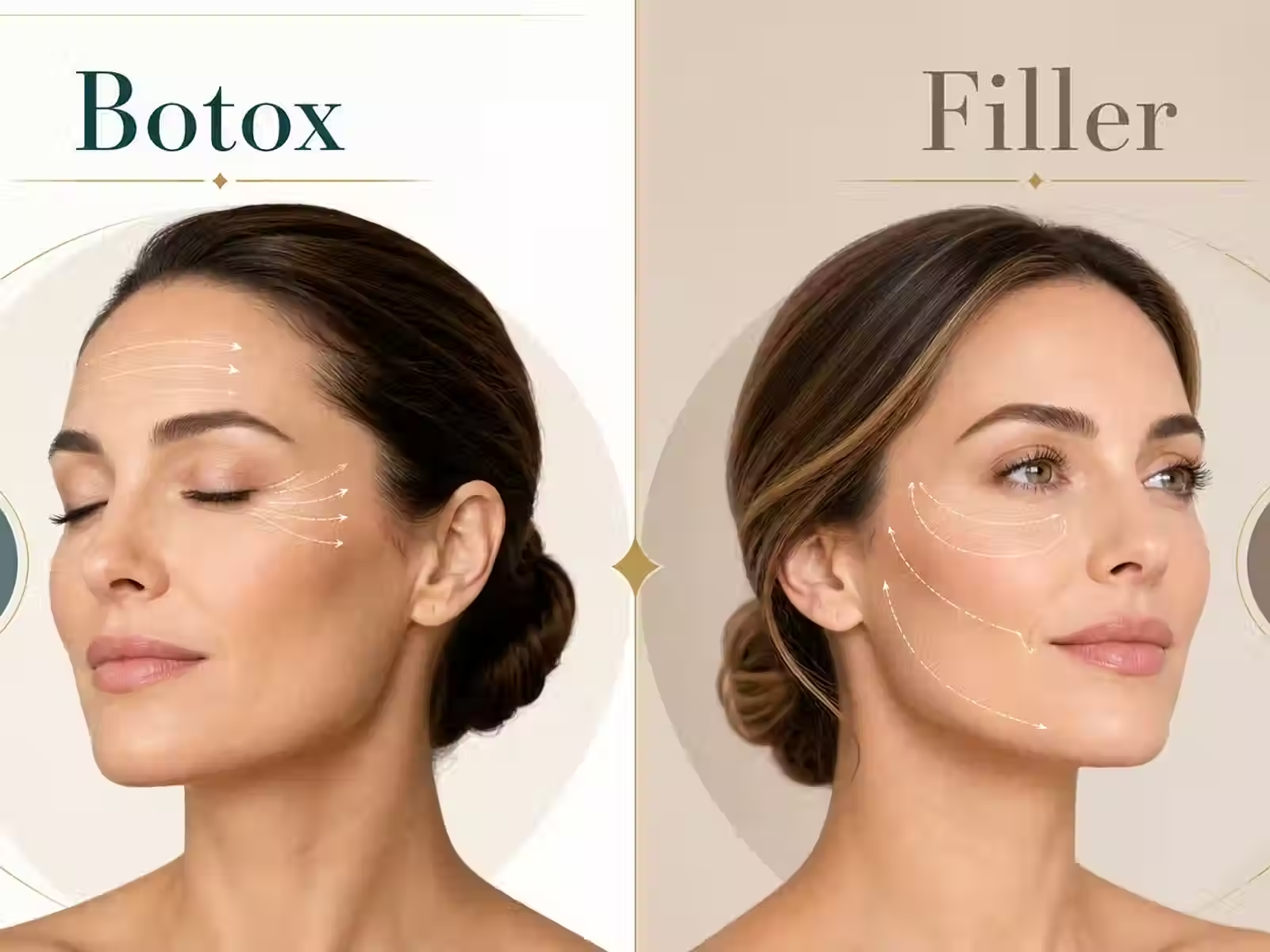
What is Botox?
Botox is the best-known brand name for a botulinum toxin treatment. In everyday conversation, many people use Botox to describe the whole category of wrinkle-relaxing injections, although different approved brands may be available depending on the clinic and country.
Botulinum toxin works by temporarily reducing the signal between a nerve and a selected muscle. When the muscle contracts less strongly, the overlying skin creases less. This can soften lines caused by repeated expressions, such as frowning, raising the brows, or smiling.
Botox is commonly used for frown lines, horizontal forehead lines, crow's feet, bunny lines, chin dimpling, downturned mouth corners in selected patients, jaw slimming or teeth grinding concerns through masseter treatment, gummy smile in selected cases, and excessive sweating when medically appropriate.
Botox does not fill a hollow area. It does not lift the cheek by adding volume. It does not plump the lips like lip filler. It is most useful when the main concern is muscle movement.
What is filler?
Dermal fillers are injectable gels used to restore volume, smooth selected folds, improve contour, and enhance facial balance. Many common fillers are made with hyaluronic acid, a substance that naturally exists in the skin and attracts water. Other filler types exist, and each product has its own texture, strength, placement depth, and expected duration.
Filler is commonly used for lip volume and lip border definition, cheek support and mid-face volume, nasolabial folds, marionette lines, chin projection, jawline definition, under-eye hollows in carefully selected patients, and temple volume loss in selected patients.
Filler is not simply about making features bigger. In skilled hands, filler can restore support, rebalance proportions, and create a softer transition between facial areas.
The biggest difference: movement lines vs volume loss
The easiest way to understand Botox vs filler is to look at your face in motion and at rest. If a line appears mainly when you move your face, it is usually a dynamic line. Examples include forehead lines when raising your eyebrows, frown lines when concentrating, and crow's feet when smiling. Botox is often the better choice because the problem is muscle activity.
If a line, hollow, or fold is visible when your face is completely relaxed, filler may be more appropriate. Examples include flattened cheeks, thin lips, deep smile lines, marionette folds, or a recessed chin. These concerns often come from volume loss, tissue descent, bone structure, or natural anatomy.
Some concerns involve both. A deep frown line, for example, may begin as a movement line but become etched into the skin over time. Botox can reduce the muscle movement that worsens it, while a conservative filler plan or skin treatment may be considered later if the crease remains visible at rest.
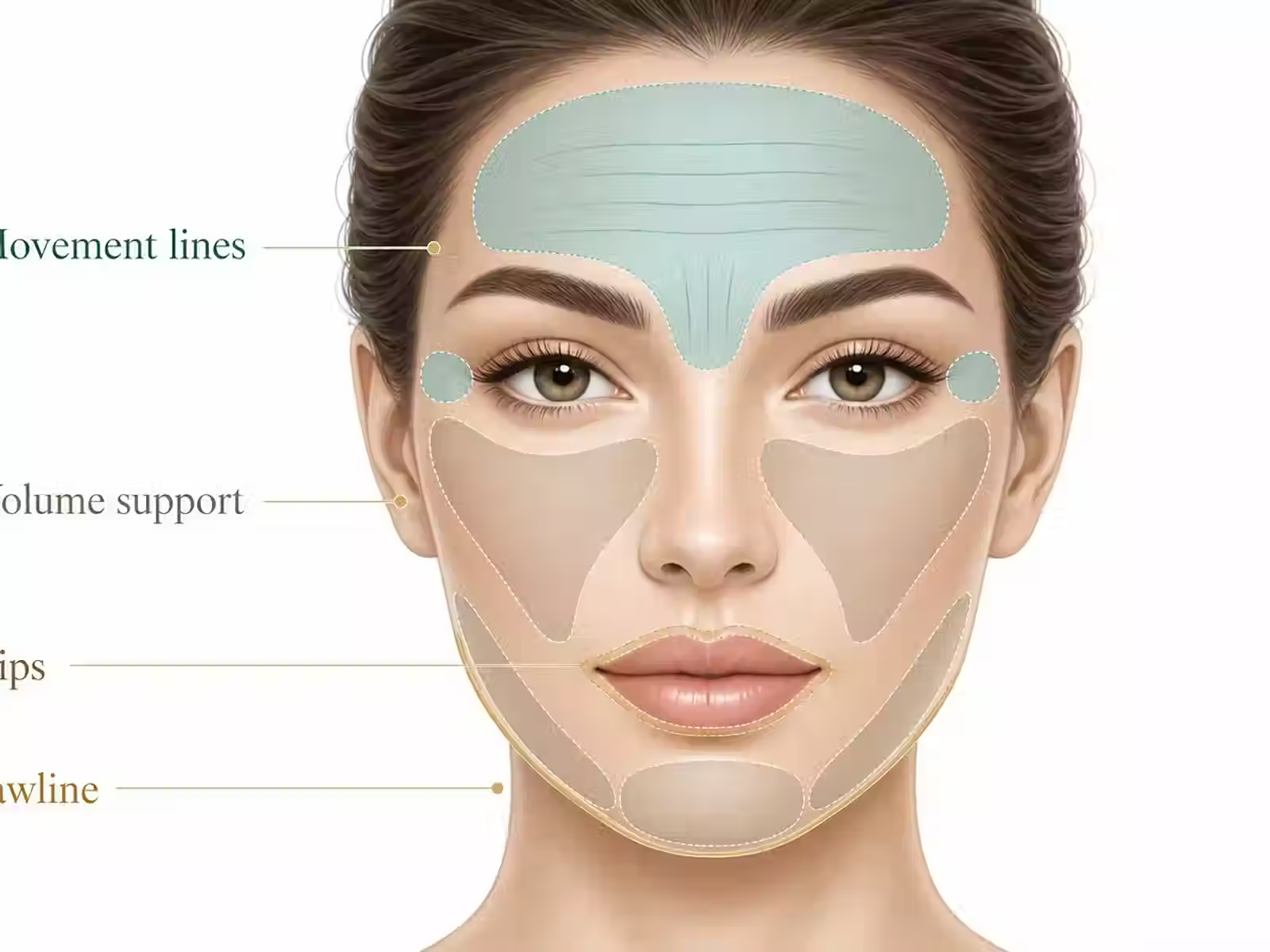
Botox or filler by treatment area
Can you combine Botox and filler?
Yes, Botox and filler can be used in the same overall facial rejuvenation plan when appropriate. They are not interchangeable, so combining them should be based on diagnosis rather than trends. A patient may choose Botox for frown lines and crow's feet, then use filler to restore cheek support or improve lip shape.
In some cases, your doctor may stage the treatments rather than do everything at once. This allows the Botox to settle first, helps avoid over-treatment, and makes the final result easier to refine.
Which lasts longer: Botox or filler?
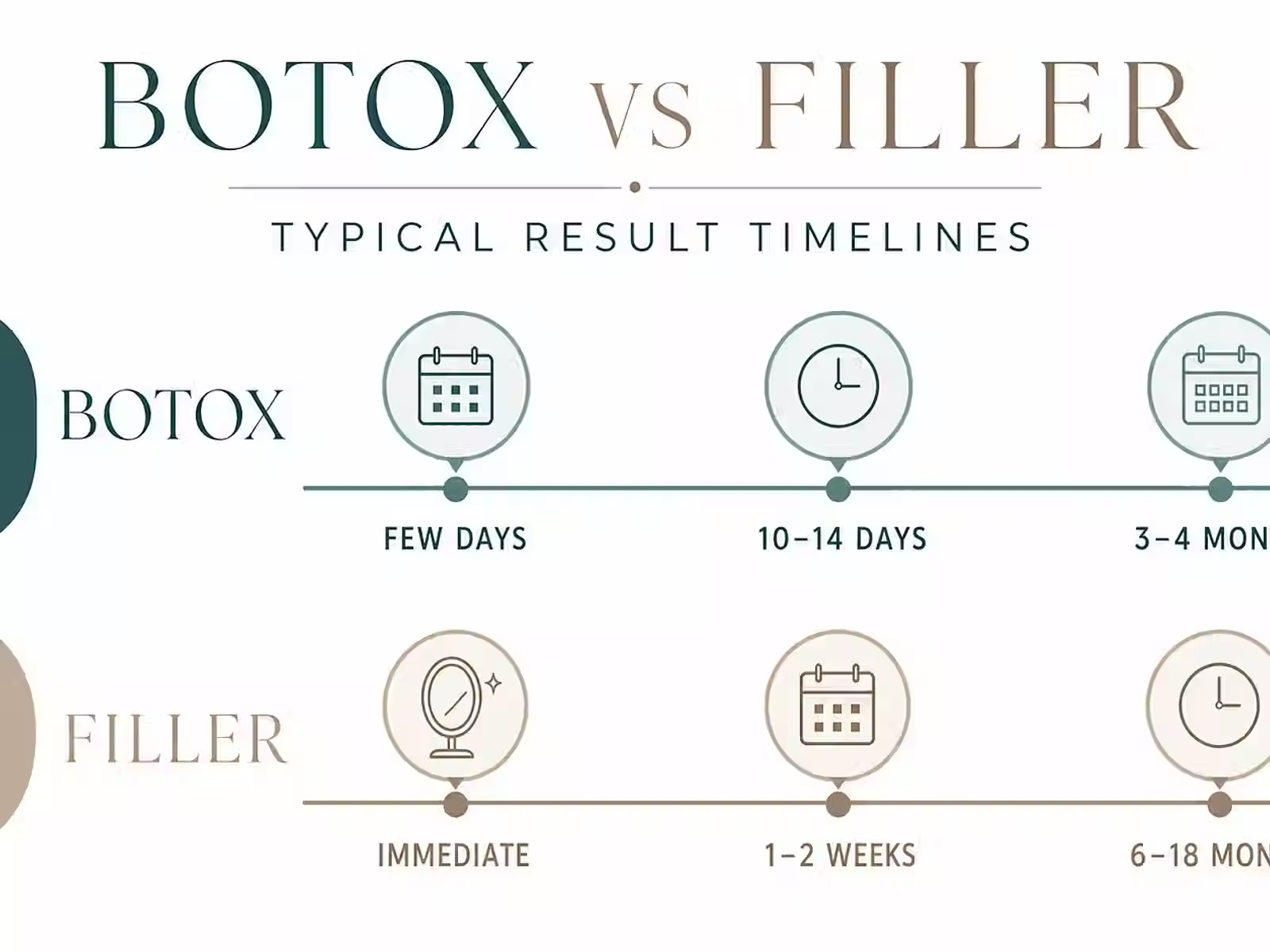
Botox commonly lasts around 3 to 4 months for many cosmetic facial treatments, although this varies with the area treated, dose, muscle strength, metabolism, and treatment history. Some patients notice movement returning earlier. Others may maintain results longer with consistent treatment.
Filler usually lasts longer than Botox, but the duration depends heavily on the product and placement area. Lip filler often metabolizes faster than filler placed in structural areas such as the cheeks or chin. Do not choose filler only because it lasts longer. A longer-lasting result is only valuable when the product, placement, and facial plan are right.
Which is safer: Botox or filler?
Both Botox and filler are medical procedures. Both can be safe in the right hands, and both can cause complications when performed poorly, with inappropriate products, or in an unsafe setting.
Botox side effects may include temporary redness, swelling, bruising, headache, asymmetry, heaviness, eyelid or brow drooping, or an unwanted change in expression. Serious spread-of-toxin symptoms are rare in cosmetic use but require urgent medical attention.
Filler side effects may include swelling, bruising, tenderness, lumps, asymmetry, infection, and unsatisfactory shape. Rare but serious filler complications can include vascular blockage, skin injury, or vision-related complications. This is why product choice, anatomy knowledge, sterile technique, and emergency protocols matter.
In Dubai, DHA standards emphasize that non-surgical cosmetic procedures should be performed in properly licensed healthcare settings by appropriately licensed and privileged professionals. DHA checklist guidance also states that cosmetic Botox and fillers are prescription-only medicines and should be administered by a trained and privileged licensed physician.
Who should avoid or delay treatment?
You may need to delay Botox or filler if you have an active skin infection, active cold sore in the treatment area, recent dental infection, uncontrolled medical condition, or a recent major procedure in the same area. Pregnant and breastfeeding patients are often advised to postpone cosmetic injectables because safety data is limited.
Your doctor should review your medical history, medications, allergies, previous injectable treatments, and expectations before recommending treatment.
Botox vs filler cost in Dubai
Botox and filler are priced differently. Botox is often priced by area or by units. Filler is often priced by syringe or by treatment plan. The final cost depends on the product used, treatment area, amount needed, doctor expertise, and whether the plan is simple or more advanced.
A consultation prevents wasted treatment. If the line is caused by muscle movement, filler may not fix it. If the concern is volume loss, Botox may not improve it. Choosing the wrong injectable is the most expensive option because it can create a result you did not want.

What to expect at a consultation
A good injectable consultation should feel like a medical assessment, not a sales conversation. Your doctor should examine your face at rest and in movement, ask about your goals, review your medical history, explain realistic outcomes, and discuss risks.
Botox and filler aftercare basics
Your aftercare instructions should come from your treating doctor because they depend on the treatment area and product. In general, many patients are advised to avoid rubbing the treated area, intense exercise, saunas, steam rooms, heavy heat exposure, and alcohol for a short period after treatment.
For Botox, your doctor may ask you to stay upright for several hours and avoid massaging the area. Results are not immediate, so do not judge the outcome on the same day. For filler, mild swelling or bruising can happen. The result may look fuller at first because of swelling, especially in the lips.
Seek urgent medical advice after filler if you notice severe pain, skin blanching, a mottled or dusky skin color, worsening swelling, visual symptoms, or anything that feels unusual. Serious complications are rare, but early action matters.
So, is Botox or filler better?
Neither is better for everyone. Botox is better for movement-related wrinkles. Filler is better for volume loss, contour, and deeper folds. The most natural result often comes from choosing the right treatment for the right reason, using the smallest effective amount, and respecting your facial anatomy.
Why choose Mahan Polyclinic in Business Bay?
Mahan Polyclinic offers medical aesthetic consultations in Business Bay, Dubai, with a focus on natural-looking results, facial balance, and patient safety. Every injectable plan should begin with an assessment, not a trend.
Whether you are considering Botox, dermal filler, or a combined plan, the team can help you understand what is suitable for your face, what to expect, and how to maintain your results safely. Book a consultation at Mahan Polyclinic to compare Botox vs filler for your own facial goals.

Frequently asked questions
Is Botox better than filler?
Botox is better for wrinkles caused by muscle movement, such as frown lines, forehead lines, and crow's feet. Filler is better for volume loss, lips, cheeks, facial folds, and contouring. The better option depends on the concern being treated.
Do I need Botox or filler for forehead lines?
Forehead lines are usually treated with Botox because they are caused by muscle movement. Filler is not the usual first option for forehead lines and can carry higher risk in that area.
Do I need Botox or filler for smile lines?
Smile lines are often treated with filler because they usually involve folds, volume loss, and facial support. Botox may be considered in selected nearby muscles, but it is not usually the main treatment for nasolabial folds.
Can Botox and filler be done on the same day?
Sometimes, but not always. Your doctor may recommend treating different areas on the same day or staging treatment over separate visits. Staging can be useful when the best result depends on seeing how Botox settles first.
Which looks more natural, Botox or filler?
Both can look natural when used conservatively and correctly. Both can look unnatural when overdone or placed poorly. Natural results depend more on the injector's assessment, product choice, dose, and technique than on the treatment category.
Is filler reversible?
Some hyaluronic acid fillers can be dissolved by a qualified medical professional using an enzyme. Not all fillers are dissolved the same way, and reversal still requires medical judgment.
How soon will I see results?
Botox results develop gradually and often reach their full effect around 10 to 14 days. Filler results are often visible immediately, but swelling can make the area look fuller before it settles.
How long should I wait before an event?
For Botox, allow at least 2 weeks before an important event. For filler, allow at least 2 to 4 weeks when possible, especially for lips or visible facial areas where swelling or bruising can occur.
Is Botox or filler painful?
Most patients describe both as tolerable. Fine needles or cannulas may be used, and filler treatments often involve numbing cream or filler products containing local anesthetic. Sensitivity varies by treatment area.
Can men get Botox or filler?
Yes. Men often choose Botox for frown lines, forehead lines, crow's feet, masseter concerns, or excessive sweating. Filler may be used for chin, jawline, or facial support when it suits the patient's anatomy and goals.