

Start With the Most Important Question: When Was Your Treatment?
Botulinum toxin treatment is not an instant filler. It reduces selected muscle activity over time, so a face may still move normally in the first few days. If your appointment was recent, judging the result too early can create unnecessary worry.
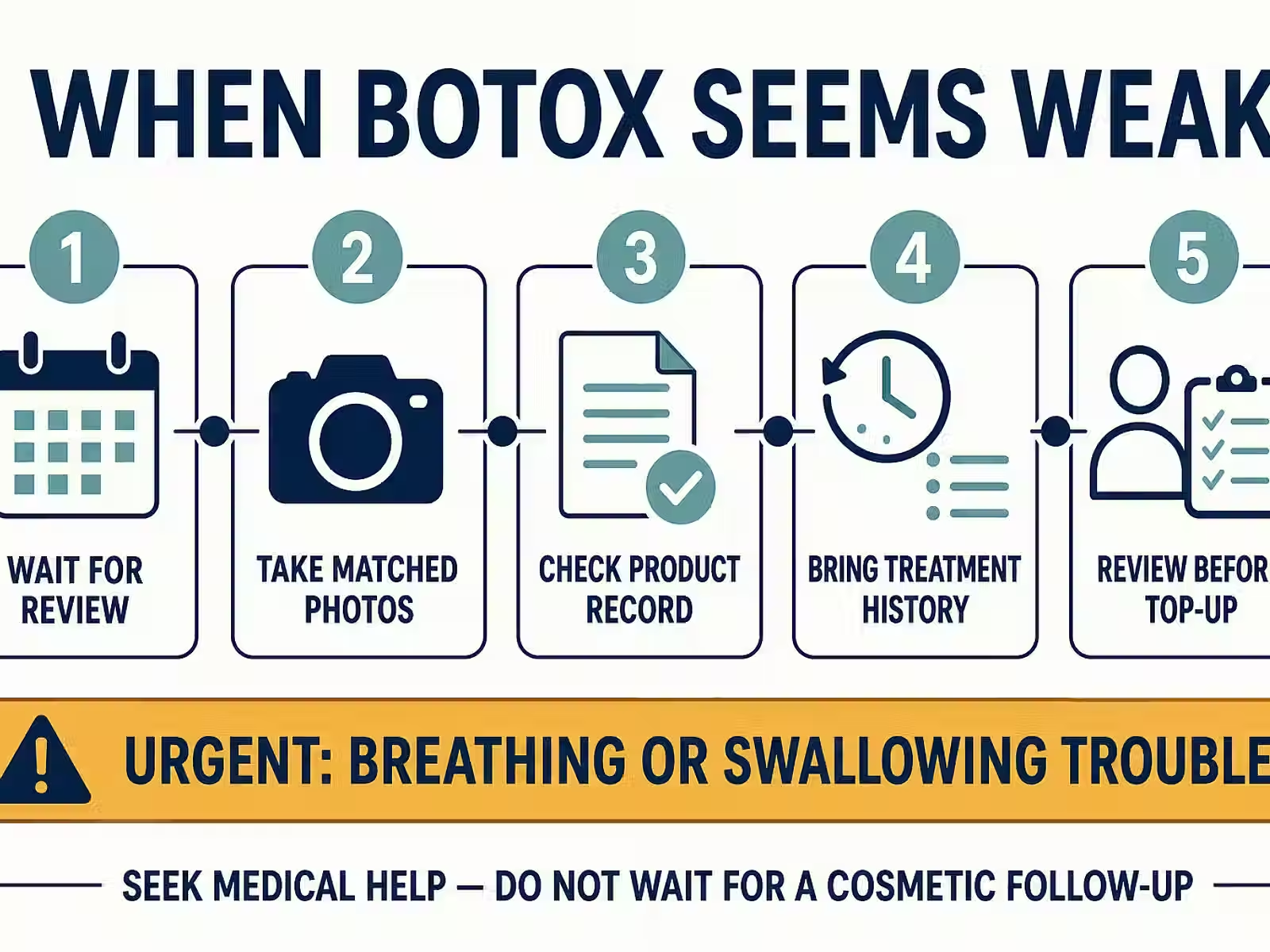
Follow the review timing given by your clinician. Take photographs at rest and during the same expression in similar lighting. A planned review is more useful than an immediate top-up because the clinician can compare movement after the treatment has had time to develop. Botox temporarily reduces selected muscle activity. A deep line visible while your face is resting may not disappear simply because related movement is softer. Skin quality, established creasing, anatomy, and muscle strength all affect what you see.
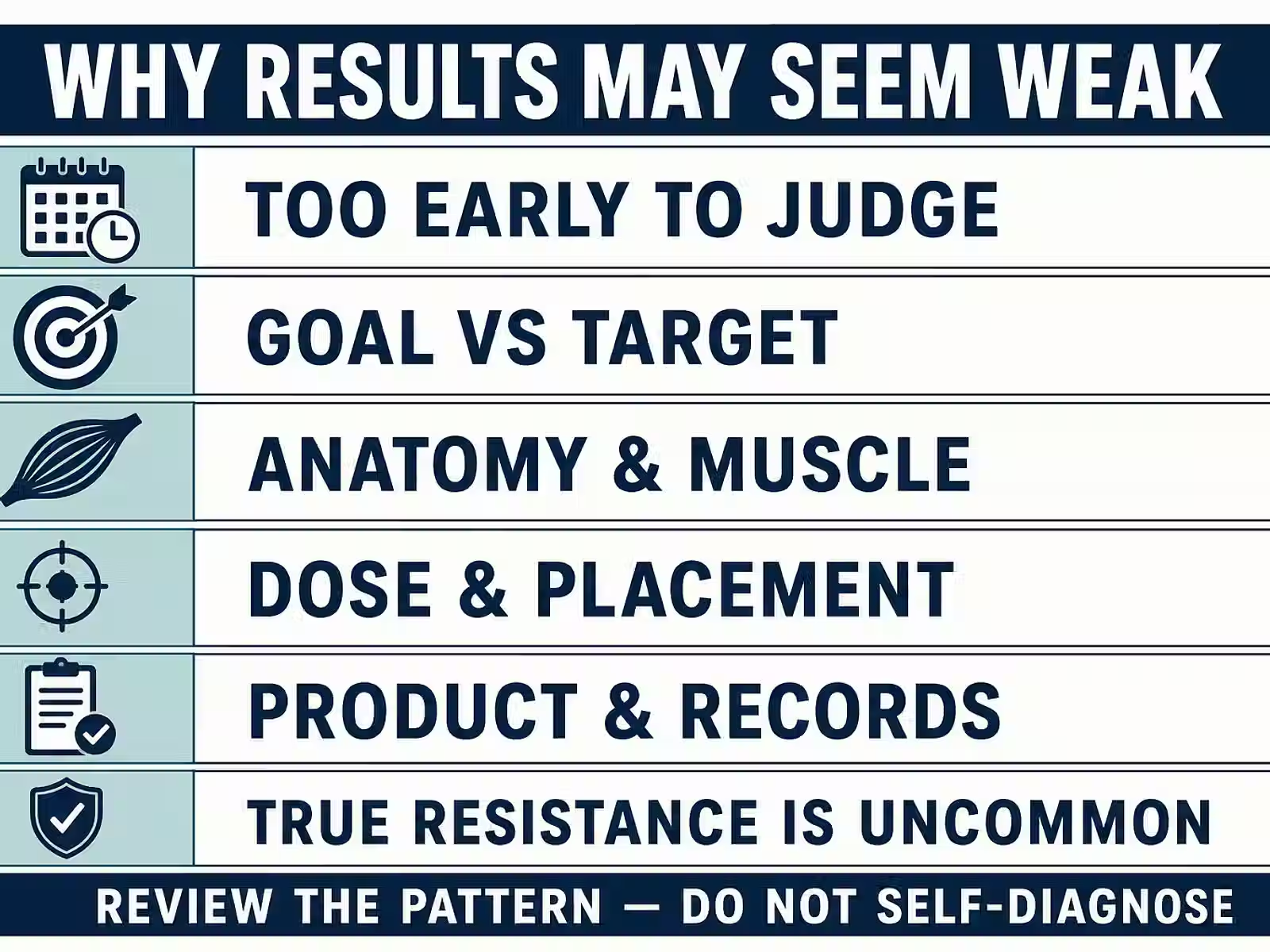
Six Reasons Botox Results Can Seem Weak
1. The Effect is Still Developing
The earliest explanation is often timing. Different areas and individuals do not always change at the same pace. Look for a reduction in movement, not only a completely smooth surface. If movement is beginning to soften, the treatment may still be developing.
2. The Goal and the Treatment Target Were Not the Same
A person may ask to soften a forehead line, lift the brow, reduce a frown, or preserve natural expression. These are not interchangeable goals. A conservative plan may intentionally leave more movement, while a stronger reduction may not be appropriate for every face. If the outcome feels too subtle, the first question is whether the original plan matched the result you expected.
3. Facial Anatomy and Muscle Strength Vary
The same pattern will not produce the same appearance in every person. Muscle size, asymmetry, previous procedures, and habitual expressions can affect the response. A useful review compares your movement with your own baseline, not another patient’s photographs.
4. Dose and Placement Are Treatment-Specific
Botulinum toxin must be selected and placed for the intended muscle and goal. Too little effect in one area can relate to the treatment plan, but more product is not automatically the answer. Placement, depth, anatomy, desired movement, and safety all matter. The FDA prescribing information states that safe and effective use depends on proper storage, correct dose selection, reconstitution, administration technique, and knowledge of the relevant anatomy.
5. Products and Their Units Are Not Interchangeable
“Botox” is often used casually for several botulinum toxin type A products, but their units cannot be converted as if they were identical. The FDA label specifically warns that BOTOX Cosmetic potency units cannot be compared with or converted into units of other botulinum toxin products. A result after one formulation should therefore be reviewed using the exact product and treatment record, not a unit-for-unit comparison found online. Mahan Poly Clinic’s guides to approved Botox brands in Dubai and Dysport, Allergan Botox and Nabota explain why brand, dosing language, and treatment planning need to be discussed together.
6. True Secondary Non-Response May Be Considered
Secondary non-response means someone responded previously but later experiences a reduced or absent effect. Neutralizing antibodies are one possible reason, but they should not be assumed after one appointment. A pooled analysis found neutralizing antibody formation was uncommon and had limited clinical impact overall. A medical review of botulinum toxin treatment failure describes several other possible contributors, including treatment timing, dose, injection technique, product handling, and differences between primary and secondary non-response. That is why “Botox resistance” is a conclusion for a qualified clinician to investigate, not a label to apply based on a short-lived or uneven result.
Weak Result, Short Duration, or Resistance? A Practical Comparison
These patterns are not diagnoses, but they can help you prepare for a useful review:
The key distinction is movement. “It wore off quickly” and “it never reduced movement” are different observations. Write down when you first noticed a change, which expression returned, and whether every treated area behaved the same way.
What to Document Before a Botox Review
Good notes make an assessment more precise. Bring or record:
Do not alter prescribed medicines or supplements to try to change the result. Share a complete history and let the clinician decide what is relevant.

What a Professional Review Should Clarify
A review should begin with your goal, baseline photographs, and current facial movement. The clinician can examine whether the expected response is present, whether a line is dynamic or visible at rest, and whether asymmetry existed beforehand.
The treatment record matters. Product, area, preparation, planned dose, placement, and previous response provide context that a new clinic may not have. If you seek a second opinion, ask for your records instead of relying on memory alone.
The next step is not always additional toxin. A clinician may recommend waiting, reassessing the goal, modifying a future plan, or considering whether the concern is better addressed through a different category of treatment. For example, readers unsure whether their concern is muscle movement or lost volume can review Botox versus filler, but the correct choice still depends on an in-person facial assessment.
What Not to Do When Botox Seems Not to Work
When Symptoms Need Urgent Medical Help
Most questions about a subtle or uneven cosmetic result can be handled through a scheduled clinical review. Different symptoms require urgent action. The FDA label advises immediate medical attention if swallowing, speech, or breathing difficulties occur after botulinum toxin treatment. Widespread weakness, double vision, or other concerning symptoms beyond the treated area also need prompt medical assessment.
If you are unsure whether a symptom is urgent, contact the treating clinic and local emergency services. Do not wait for a routine cosmetic follow-up when breathing or swallowing is affected.
Choosing a Clinic for a Consistent Botox Plan in Dubai
Consistency begins before the injection. A consultation should cover your goal, facial movement, health history, prior toxin treatments, and the expression you want to keep. You should know which product is used and how follow-up works.
Look for a clinic that documents treatment rather than treating every face from a fixed template. Ask how results are reviewed, what photographs are taken, and what happens if an area responds differently than expected. Avoid guarantees such as “completely frozen,” “painless,” or “the same result for everyone.” Results vary, and a safe plan balances the requested change with facial anatomy and function.
At Mahan Poly Clinic in Business Bay, Dubai, Botox is listed among the clinic’s verified aesthetic services. A consultation can help separate a timing or expectation issue from a treatment-plan question without assuming that more product is necessary.

Frequently Asked Questions
Can someone be completely resistant to Botox?
Immune-related non-response can occur, but it is uncommon and should not be assumed from one weak result. Clinicians first review timing, the treated goal, facial movement, product, technique, and prior response. Testing or a change in strategy is a medical decision.
Does switching Botox brands solve a weak result?
Not automatically. Products differ, and their units are not interchangeable. A clinician needs to understand why the result seemed weak before deciding whether a different formulation or future plan is appropriate. Mahan’s Nabota versus Allergan guide provides a patient-friendly comparison without treating brands as identical.
Why did one side or one area respond more than another?
Natural asymmetry, different muscle strength, treatment placement, and a conservative plan can all affect the appearance. Pre-treatment photographs and an expression-based examination help the clinician assess the pattern.
Can I have more Botox immediately if I see movement?
Movement alone does not prove treatment failure. Follow the review timing provided by your clinician and avoid an unscheduled top-up. The safest next step depends on the area, the original goal, and the response already present.
Should I book with the same clinic or get a second opinion?
The treating clinic has the original record and is often the best place to start. A second opinion may also be reasonable if you have unresolved concerns, but bring the product and treatment details so the new clinician can review the full history.
The Bottom Line
When Botox does not look as expected, the safest response is not to assume resistance or immediately add more product. Give the result the advised time, document movement consistently, and arrange a professional review. Timing, expectations, anatomy, product, and treatment planning are more useful starting points than self-diagnosis.
If you would like an in-person assessment in Business Bay, book a consultation with Mahan Poly Clinic. For questions before booking, use the clinic’s verified contact page. Results vary, and personalized medical advice requires a qualified professional to examine you and review your treatment history.